
Get Ready for our Third Album, Island Poetry
Mad Painter's third album, Island Poetry, is out on Epictronic. It's preceded by three new singles from this album, Empty Bottles, Debt Collector and Spin Your Ventilator.
Via Nocturna 2000 reviews Island Poetry
There are albums that seem to have been lost in the 70s and have only now been rediscovered. Island Poetry is one of them. Fortunately, no one has modernized its sound. In this third album, Mad Painter , a band from the Boston area, present the successor to Splashed with a more focused songwriting, mostly conceived for this lineup, and an organic, entirely analog sound. The organ is the great agitator of this party. Brilliant in the way it leads, provokes and responds to the guitar, it evokes The Doors as much as it fuels the muscular swing of Deep Purple . Instrumental dialogues gain space in the longer compositions, but they also know how to pick up the pace when the boogie demands its turn. With something of Status Quo in that ease, it should be noted. On another front, the drama, the vocal harmonies and the changes of scenery also emerge and bring the album closer to art rock . In fact, the vocals deserve particular mention, adding expressiveness and theatricality. On the other hand, the use of the piano is not very frequent, it's true, but it brings another intimacy and gives the songs a storytelling tone, as felt in I Am The King . In Nektarized (dedicated to Nektar ?) the rhythmic strangeness and chameleon-like structures would even warrant a second title: Bowieized . Curiously, it is later, in Two Horsemen, that the connection to Nektar is most evident, through the rhythmic structures with a jazz-prog feel and the sound of the flutes hovering. In fact, this freedom is one of the album's best arguments. The respectful rendition of Circle Of Hands , by Uriah Heep , closes a collection that seems recovered from an excellent shelf from the 70s. But with enough life to dispense with the dust.
“Island Poetry” by Mad Painter - Dolce Brano
“Island Poetry” by Mad Painter - Dolce Brano
Mad Painter's "Island Poetry" revives the energy and adventurous spirit of 1970s British hard rock and progressive rock, breathing new life into classic sounds. Led by Boston-based singer-songwriter Alex Gitlin, the band combines the roaring sound of a Hammond organ, thumping electric guitars, driving bass, and powerful drums to create a sound rooted in rock tradition. The twelve-track album spans hard rock, glam, psychedelia, and progressive influences, offering a collection rich in variety and personality. Rather than simply revisiting the music of a bygone era, Mad Painter draws inspiration from that golden age, infusing it with their own theatrical flair and creative spirit. The production retains a warm, vintage feel, allowing the instruments to retain their natural textures and authentic charm. Listeners who enjoy bold arrangements, memorable choruses, and high-energy performances will find plenty to enjoy in this lively work.
One of the album's strengths is its diversity: each track reveals a different facet of the band's musical influences. "Debt Collector" and "Suit of Worries" recall the powerful, organ-driven sound of Deep Purple, while "Empty Bottles" unleashes the direct energy of boogie-rock, in the vein of Status Quo. The more aggressive guitar work of "Spin Your Ventilator" brings to mind AC/DC, while "Last Night You Dreamed I Was in Love with Someone Else" captures that dramatic atmosphere typical of Rainbow. "Nektarized" explores space-disco sounds inspired by Ganymed, while "Shadow of the Words" embraces the theatrical grandeur of Queen. The intertwining of the two guitars in "Two Horsemen" evokes Wishbone Ash, and "I Am the King" features melodic nuances reminiscent of the Moody Blues. "Stand Your Ground" channels the intensity of
Motörhead, while "Circle of Hands" pays homage to Uriah Heep. "Tommy Lost It All" adds to the album's distinctive character. The lyrics, written by music journalist Dmitry M. Epstein for six of the tracks, enrich the album with vivid imagery, a touch of humor, and dramatic storytelling. Gitlin's creative direction is reinforced by drummer Al Hendry, bassist Kenne Highland, and guitarist Al Naha, while backing vocalists Sharon Crumrine and Julie Gee enrich the arrangements. Their ensemble work gives the album a compelling sound, perfect for both live performances and repeated listening. Ultimately, *Island Poetry* celebrates classic rock through vigorous riffs, bold instrumental mastery, and infectious melodies. Mad Painter pays homage to their inspirations while maintaining a clear artistic identity, delivering a vibrant collection that reminds longtime fans and new listeners alike why this genre remains so compelling.
Mad Painter’s “Island Poetry” Is A Glorious Celebration of Rock’s Golden Age
Mad Painter’s “Island Poetry” Is A Glorious Celebration of Rock’s Golden Age
Boston, Massachusetts, group sends a glorious reminder that the spirit of 1970s rock is still alive, loud, and unpredictable. Meet Mad Painter, a band with a Hammond organ at its heart, fire in its guitars, and a genuine love for melodic, theatrical, and heavy music. Led by songwriter and musical visionary Alex Gitlin, the group features drummer Al Hendry, bassist Kenne Highland, guitarist Al Naha, and backing vocalists Sharon Crumrine and Julie Gee. Together, they carry the freedom of psychedelic rock, the swagger of glam, and the mighty sound of classic British hard rock into the present.
With “Island Poetry,” their third studio album, Mad Painter deserves a wholehearted reception. This is not just a trip down memory lane; it is a celebration of the spirit that made classic rock exciting. Released through Italian independent label Epictronic, the album confidently moves between hard rock, progressive adventures, space disco, emotional balladry, and heavy metal. Each song opens a different door, yet the band’s personality holds everything together.
“Debt Collector” opens the album with bluesy swagger and a wonderfully mischievous streak. Its lyrics poke fun at an arrogant man who treats romance like a transaction, giving the song a comic edge beneath its muscular rock sound. Gitlin delivers the lines with attitude, while the Hammond and guitar trade blows and the backing vocals add a playful theatrical touch. It is a lively introduction to the band’s character.
Driven by an irresistible boogie-rock rhythm, “Empty Bottles” looks at loneliness, hopelessness, and the emotional weight of isolation. Yet it refuses to surrender to despair. Beneath the catchy melody, it reminds us that difficult times can be survived and brighter days remain possible. The steady rhythm section and uplifting keyboard work give the song warmth, movement, and a welcome sense of hope.
Here, Mad Painter turns up the riff-driven energy and embraces the straightforward thrill of hard rock. Inspired by AC/DC’s muscular approach, “Spin Your Ventilator” transforms an unusual lyrical idea into an infectious, head-nodding rocker. The guitars bite, the rhythm section stays punchy, and the Hammond adds extra grit. Its playful absurdity is part of the attraction: not every rock song needs to take itself seriously.
With “Suit of Worries,” anxiety takes center stage in this heavier, more dramatic number. The central image suggests a person so consumed by worry that it becomes part of their identity, an invisible outfit they cannot take off. Gitlin’s delivery suits the uneasy mood, while the Hammond and guitar build a tense, forceful musical argument. The result is classic hard rock with a distinctly human concern at its heart.
The fifth song, “Last Night You Dreamed I Was in Love with Someone Else,” is a romantic insecurity that receives the full rainbow treatment: grand melodies, heightened emotion, and a theatrical atmosphere. The title suggests jealousy, suspicion, and the strange power dreams can have over a relationship. Mad Painter gives the song room to unfold rather than rushing to finish, allowing the instrumental drama to complement its emotional uncertainty.
One of the album’s most adventurous moments, “Nektarized” takes an unexpected turn into space disco and progressive rock. Its lyrics weave together references to songs and albums by Nektar, creating a playful stream of musical imagination rather than a conventional narrative. The shifting textures and opportunities for instrumental exploration demonstrate the band’s willingness to stretch beyond familiar hard-rock territory. It is quirky, colourful, and refreshingly unpredictable.
“Shadow of the Words” is the theatrical side of Mad Painter that shows in a composition that recalls Queen’s grand arrangements and layered harmonies. Its imagery suggests catastrophe and uncertainty, but the emotional message offers a way forward through love, openness, and hope. The backing vocals add scale and drama, while the shifting instrumental layers make the song feel larger than life. It is an ambitious blend of darkness and light.
Built around a poem by Joseph Brodsky, translated into English by Natalia Belenkaya, “Two Horsemen” brings a literary depth to the album. Its roaming arrangement draws on Wishbone Ash-style twin-guitar interplay, British blues, and progressive rock. The musicians are given room to explore, with the instruments conversing rather than merely following a fixed pattern. The result is thoughtful, expansive, and among the album’s most musically open-ended passages.
Mad Painter sound most unmistakably like themselves in “Tommy Lost It All.” This melancholy ballad replaces heavy riffs with atmosphere, touching piano, expressive Hammond organ, and layered guitar work. Its title suggests loss and regret, and the arrangement carries a wistful sadness without becoming hopeless. The vocal delivery benefits from this more reflective setting, revealing a gentler side of a band equally comfortable with thunder and tenderness.
Existential questions take over in “I Am the King,” a song that balances grandeur with introspection. Influences from the Moody Blues and Barclay James Harvest colour its stately, melodic character, while the lyrics explore the paradox of being eternal yet insignificant. Piano, keyboards, guitars, and vocal layers give the track a thoughtful, almost spiritual atmosphere. It reminds us that Mad Painter’s ambitions extend well beyond the power of a good riff.
After the reflective mood of the previous track, “Stand Your Ground” arrives like a door kicked open. Motörhead-inspired aggression takes the lead, delivering speed, defiance, and a wonderfully unruly heavy-metal attack. The performance is direct and forceful, with little room for unnecessary decoration. Beneath the anger sits a playful awareness of rock’s larger-than-life attitude, making this one of the album’s most exhilarating changes of pace.
With “Circle of Hands,” Mad Painter close with their interpretation of Uriah Heep’s classic, a fitting tribute to one of the band’s deepest musical inspirations. Hammond-driven power, layered vocals, and a spiritual sense of grandeur give it weight. Rather than attempting to reinvent the original, the group approaches it with respect and conviction. The result brings the album full circle, connecting its many musical adventures to the tradition that helped shape them.
The vocal approach is central to the album’s appeal. Mad Painter works within a tradition where singing must do more than carry a melody: it must communicate character, attitude, and drama. The backing vocals of Sharon Crumrine and Julie Gee add another layer to the band’s musical identity, expanding the possibilities for fuller harmonies and a richer ensemble sound.
Instrumentally, Island Poetry celebrates the classic combination of Hammond organ, electric guitar, piano, bass and drums. The Hammond provides a vital connection to the golden age of hard rock, while the guitars bring bite, colour and melodic movement. Bass and drums supply the foundation, allowing the arrangements to move between heavy riffs, boogie grooves and more expansive passages. The piano and layered vocals add further texture to the overall palette. The production favours warmth and a full-band feel over excessive polish. That approach suits the material: the music is meant to sound played, not assembled from lifeless pieces. The album’s range of influences could easily have become a collection of disconnected imitations, but its shared instrumental language helps hold the twelve tracks together.
Six songs feature lyrics by writer and music journalist Dmitry M. Epstein, whose contribution brings wit, character and dramatic imagery to the record. The variety of song titles alone suggests a collection interested in human weakness, personal conflict, romantic uncertainty, defiance and the absurdities of everyday life.
“Island Poetry” is a lively, affectionate, and adventurous homage to an era when rock could be heavy, playful, theatrical, and deeply melodic all at once. Mad Painter draws inspiration from their heroes without reducing the album to a checklist of influences, and their range gives the album its character. If you are a listener and you miss the grand gestures, roaring organs, twin-guitar melodies, and unapologetic spirit of classic rock, Mad Painter deserves a wholehearted welcome. With this record, they remind us that the golden age is not just a memory; it can still make plenty of glorious noise. “Island Poetry” is an invitation worth accepting. Let’s turn it up, let the organ roll, and give Mad Painter the cheerful welcome their musical spirit deserves.
Illustrate Magazine reviews Island Poetry
Illustrate Magazine reviews Island Poetry
https://illustratemagazine.com/island-poetry-by-mad-painter-album-review/
Mad Painter brings the grand gestures and muscular melodies of classic British rock roaring back to life on Island Poetry, an album that celebrates the drama, grit, and adventurous spirit of the 1970s without getting trapped in a nostalgia loop. Led by vocalist, keyboardist, and songwriter Alex Gitlin, the Boston-based band embraces a sound where roaring Hammond organ, vibrating guitars, pounding drums, and rich vocal harmonies collide with theatrical flair. It’s rock music with its sleeves rolled up and its ambitions set sky-high.
“Debt Collector,” the album’s opening track, gets things moving with a feisty, bounding energy. Sharp, sparkling cymbals cut through the mix as the drums push forward, while vibrating guitars add layers of restless electricity. The different sounds tumble together into a lively, full-bodied arrangement, giving the track plenty of momentum. At the center of it all, Gitlin’s thick, commanding voice brings an engaging presence, delivering the song with a rough-edged confidence that suits the band’s hard-rocking attitude.
By the time “Circle of Hands” arrives at track twelve, the mood turns darker and more immersive. Gritty guitars establish a brooding atmosphere, creating space for the vocals to soar. The performance grows increasingly impassioned, with Gitlin belting out his lines in a soulful, echoing style while wailing harmonies rise around him. The contrast between the song’s weighty instrumental backdrop and its expansive vocal moments gives it a powerful dramatic pull.
Mad Painter’s musical DNA brings to mind Deep Purple and Uriah Heep, with shades of Spooky Tooth, Atomic Rooster, The Move, Mott the Hoople, and early Queen adding further color. Hammond organ remains a commanding force, not merely decoration. Ultimately, Island Poetry is a hearty celebration of classic-rock craftsmanship, delivering big riffs, memorable melodies, and the kind of expressive musicianship that rewards listeners who still love an album with real personality.
Mad Painter Dials Up the Glam and Grit on “Island Poetry”
Mad Painter Dials Up the Glam and Grit on “Island Poetry”
https://viviplay.net/mad-painter-dials-up-the-glam-and-grit-on-island-poetry/
With “Island Poetry”, Boston outfit Mad Painter throw themselves headlong into the sprawling, theatrical spirit of 1970s rock. Led by songwriter, vocalist, and keyboardist Alex Gitlin alongside Al Hendry, Kenne Highland, Al Naha, Sharon Crumrine, and Julie Gee the band pushes roaring Hammond organ runs, layered vocal harmonies, and warm analog punch to the forefront, treating classic-era rock as a playground with no speed limits rather than a museum exhibit behind velvet ropes.
The album opens at full tilt, smelling faintly of overdriven amplifiers and hot vacuum tubes. On “Debt Collector,” an abrasive garage-rock riff drives an unyielding demand for accountability, spiraling into a breathless, wailing solo that screeches to an abrupt stop. That raw punch spills across the record’s punkier corners: “Empty Bottles” counters heavy grit with a bouncy, piercing loop to deliver a message of personal renewal, while “Spin Your Ventilator” turns stifling heat into a relentless sprint for cool air.
On “Suit Of Worries,” lively staccato hooks dance across a fast-charging rhythm to turn internal panic into buoyant release, matched in speed by the snappy, loyal pop-punk declaration of “You Dreamed I Was In Love.” Then defiance flares on “Stand Your Ground,” which races through skate-punk velocity and an anthemic, spiraling solo that stares down final judgment without flinching.
Then the canvas widens, wildly. Mad Painter pivot from sweaty basement floors to cosmic voyages and grandiose art-rock melodrama. “Nektarized” pulses with space-disco cadence and celestial wanderlust, launching listeners into dramatic galactic orbits. From there, the record embraces symphonic tragedy on “Tommy Lost It All,” tracking a fallen hero over sweeping chords and a soaring solo.
“Shadow of the Words” hurtles toward mortality with galloping heavy-metal speed and alarm-like dissonance, followed by the syncopated, eerie chase of “Two Horsemen.” “I Am The King” ascends from cascading melodies to explosive peaks, pondering the hollow burden of absolute rule before the doom-laden plod of “Circle Of Hands” closes things out in a slow, psychedelic fog.
It is an unapologetic, analog-hearted record that wears its dramatic ambitions openly. In a musical landscape that often demands tidy labels, Mad Painter remind us of how thrilling rock could be when it dared to chase every impulse across the dial. What good is holding the crown if you never risk losing your breath along the way?
Island Poetry by Mad Painter - euphonyblognet
Island Poetry by Mad Painter
Mad Painter’s Island Poetry is a vibrant celebration of the golden age of rock, bringing the spirit of 1970s British hard rock and progressive rock into a contemporary setting. The Boston-based band, led by songwriter and vocalist Alex Gitlin, embraces a sound built around roaring Hammond organ, expressive electric guitars, driving bass lines and energetic drumming. Rather than simply recreating the past, the group uses its vintage influences as a foundation for an album filled with personality, theatrical flair and melodic ambition. Across its twelve tracks, Island Poetry moves through hard rock, glam, psychedelic influences and progressive arrangements, creating a varied listening experience that celebrates the freedom and adventurousness of classic rock. The warm, analog-style production further strengthens the record’s appeal, allowing the instruments and performances to retain their natural character without feeling overly polished. For listeners who appreciate the grand arrangements and powerful performances of rock’s most influential decades, Mad Painter offers a familiar yet refreshing experience.
One of the album’s greatest strengths is its diversity, with each track exploring a different aspect of the band’s musical identity. “Debt Collector” and “Suit of Worries” draw inspiration from Deep Purple, while “Empty Bottles” delivers a straightforward boogie-rock energy reminiscent of Status Quo. “Spin Your Ventilator” leans into the punchy guitar attack associated with AC/DC, whereas “Last Night You Dreamed I Was in Love with Someone Else” embraces the dramatic hard-rock atmosphere of Rainbow. Elsewhere, “Nektarized” introduces a space-disco dimension inspired by Ganymed, and “Shadow of the Words” reaches for the theatrical grandeur of Queen. The twin-guitar approach of “Two Horsemen” recalls Wishbone Ash, while “I Am the King” draws from the melodic sensibilities of the Moody Blues. “Stand Your Ground” adds a more aggressive edge with its Motörhead-inspired intensity, and “Circle of Hands” pays tribute to Uriah Heep through Mad Painter’s interpretation of the classic song. Completing the collection, “Tommy Lost It All” reflects the band’s established identity. The contributions of writer and music journalist Dmitry M. Epstein, who penned lyrics for six tracks, also bring wit, vivid imagery and dramatic character to the album.
At the heart of Island Poetry is a band that understands the importance of musicianship, strong songwriting and the communal excitement of rock music. Gitlin’s creative direction is supported by drummer Al Hendry, bassist Kenne Highland and guitarist Al Naha, with backing vocalists Sharon Crumrine and Julie Gee adding further depth to the arrangements. Together, they deliver music that feels designed for the stage as much as the studio, inviting audiences to sing along, move to the rhythms and embrace the sheer joy of a full-band performance. The album’s broad range of influences never overshadows its central purpose: celebrating rock music’s ability to combine memorable melodies, muscular riffs and theatrical expression. Island Poetry stands as an ambitious addition to Mad Painter’s catalogue, appealing to longtime classic-rock enthusiasts while welcoming newer listeners into its energetic world. It is a spirited reminder that the sounds of the 1970s remain a rich source of inspiration when approached with conviction, creativity and genuine enthusiasm.
The Sixties and Seventies Never Died: Inside Mad Painter's Gloriously Out-of-Time Island Poetry
The Sixties and Seventies Never Died: Inside Mad Painter's Gloriously Out-of-Time Island Poetry
While half the modern music industry spends its days hunting for viral TikTok trends, Boston’s Mad Painter have gone digging through the crates of the 1970s. They’ve emerged from the studio with a heavy Hammond organ, stacks of guitar leads, and a fierce, unshakeable belief that a great record should sound like it’s right on the edge of catching fire. Released via the independent Italian label Epictronic, their latest offering, Island Poetry, is an unapologetic, hour-long time machine that proudly ignores modern production trends.
Led by vocalist, keyboardist, and songwriter Alex Gitlin, the band plants its flag firmly into the heavy, melodic soil of classic rock. This isn’t a carefully clinical piece of digital pastiche. Instead, thanks to producer Tom Hamilton at Lowell Street Sound, the album favours a raw, analogue warmth where you can practically hear the full band sweating over their instruments.
The album kicks off with "Debt Collector," a classic blues-rock heavy hitter where Gitlin’s Hammond organ and Al Naha's guitars immediately fight for breathing room. Gitlin’s vocals bear a striking resemblance to a vintage David Coverdale: full of grit, power, and theatrical flair. The Deep Purple and Uriah Heep influences are worn proudly on the band's leather sleeves, but the sheer urgency of the performance keeps it from feeling like a tired tribute act.
Where Island Poetry truly succeeds is in its sonic variety. "Empty Bottles" shifts gears into a lean, no-nonsense boogie-rock rhythm that recalls Status Quo at their rowdiest. Meanwhile, "Suit of Worries", bolstered by the sharp, literary lyrics of music journalist Dmitry M. Epstein, carries a sense of dramatic, mid-tempo unease. The album’s strangest and most delightful curveball arrives with "Nektarized," which ditches the heavy guitar riffs for a silver flash of Ganymed-inspired space-disco shimmer. It’s an eccentric choice that gives the record some welcome breathing room amidst the wall of valve amplifiers.
If there is a critique to be made, it’s that Mad Painter sometimes leaves the studio furniture right where it fell. In grander tracks like the Queen-esque "Shadow of the Words," the dense arrangements can feel a bit overcrowded, where a tighter mix might have given the individual instruments more bite. The decision to close an 11-track original record with a literal cover of Uriah Heep's "Circle of Hands" is also an interesting choice; while performed brilliantly, the band had already proven over the preceding tracks that their own voice is worth listening to.
Ultimately, Island Poetry is a triumph of authentic musicianship. Supported by the rock-solid rhythm section of Al Hendry and Kenne Highland, Mad Painter has delivered a record that feels alive, dynamic, and wonderfully out of step with the 2026 musical landscape. It's a must-hear for anyone who still believes in the power of a heavy riff and a roaring organ.
We Write About Music: Mad Painter return with a spectacular 70's throwback on album, "Island Poetry"
We Write About Music: Mad Painter return with a spectacular 70's throwback on album, "Island Poetry"
Before you do anything, you’re 100% going to want to grab a nice pair of headphones and take a seat for a journey that’ll surely blow your minds. "Island Poetry" from the Boston based rock band Mad Painter is an absolute thrill ride of a record that we loved on the first listen. Just released through Italian independent label Epictronic, this record is a full immersion into Hammond-driven hard rock and progressive rock with an unmistakable glam flair, and it sucks you into its world from the very first note.
Led by songwriter and creative force Alex Gitlin, Mad Painter has always drawn deeply from the melodic rock tradition of the 1970s, but "Island Poetry" represents their most varied and ambitious statement yet. Across twelve tracks, the band moves fluidly between “Woodstock-era psychedelic rock” and glam tinged rock and roll, and remarkably, it all comes together into something that feels cohesive rather than scattered. Six of these tracks feature lyrics from writer and music journalist Dmitry M. Epstein, whose words add real wit, character, and dramatic imagery throughout. As blown away as you might be from the instrumentation, the lyricism is just as good.
Musically, this record is an absolute showcase of genuine musicianship. Recorded with Hammond organ, electric guitar, piano, bass, drums, and layered vocals, the instrumentation throughout is outstanding. It’s warm and analog in its production while still sounding vibrant and full. Drummer Al Hendry and bassist Kenne Highland provide a rock solid rhythmic foundation, while guitarist Al Naha adds real texture and flair throughout. Even better, the addition of their two new backing vocalists Sharon Crumrine and Julie Gee round things out beautifully. Those harmonies are exceptional!
The vocals throughout are genuinely emphatic, adding so much personality that suits the album's dramatic and almost theatrical feel. The full band chemistry comes through clearly, giving the whole project an organic energy that’s unfortunately too rare nowadays. We mean it when we say a live performance could change us for the better.
We couldn’t make it through this without also mentioning the sound design and atmosphere woven throughout. This is a record clearly made for headphones as mentioned, definitely to be experienced untouched from start to finish rather than shuffled through. Sitting with it as a complete listening experience reveals just how much detail and intention went into every arrangement. Be patient with it!
Mad Painter have created something so so special here. It’s ambitious in scope yet completely cohesive in its execution and it's a fantastic listen for anyone who still believes in sitting down and experiencing an album as a whole. So please, get ready for a musical time machine by clicking those links below to of course listen and follow along for more in the works coming soon.
Plastic Magazine reviews Island Poetry
Plastic Magazine reviews Island Poetry
Boston’s Mad Painter are keeping the flamboyant spirit of 1970s rock alive with an epic sound that’s struck a chord with listeners around the world. Founded and led by songwriter Alex Gitlin, the band brings together glam theatrics, psychedelic colour, blues rock grit and progressive ambition, creating music that looks back to a golden era while retaining a character of its own. With a sound shaped by the likes of Mott the Hoople, Deep Purple and Uriah Heep, Mad Painter understand that classic rock was never just about the riffs, it was also about personality, performance and the sense that anything might happen once the volume went up.
The group’s lineup brings together Alex on lead vocals and keyboards, Al Hendry on drums, Kenne Highland on bass, Al Naha on guitar and backing vocalists Julie Gee and Sharon Crumrine. Together, they’ve conformed their status within Boston’s music scene through live appearances at MIT, Out of the Blue Gallery and The Jungle Community Music Club, as well as events including Winter Tanglefest in the Poconos. Their performances are built around musicianship and magnetic energy, embracing the larger-than-life qualities that made their influences so distinctive in the first place.
Mad Painter’s recorded journey began with their self-titled debut album in 2016, introducing a kaleidoscopic approach to rock that would continue to develop over the following years. In 2022, the band returned with the singles “Illusion” and “Rock and Roll Samurai,” leading into their sophomore album, Splashed. The record further built on their mission for carrying the sound and spirit of seventies rock into the present, setting up a new release that expands the scope of their musical ambitions.
That next chapter now arrives with their brand new full-length record titled Island Poetry, released through Italian independent label Epictronic. Built around Hammond organ, electric guitar, piano, bass, drums and stacked vocals, the album leans into the warmth of analogue-style production and the collective force of a full band playing together. Its twelve tracks move between hard rock, progressive flourishes, glam and melodic seventies influences, giving the record an exciting and varied shape.
The album’s individual tracks reveal just how widely the band’s influences travel, opening track “Debt Collector” kicks off the record with a grooving blues rock jam brimming with Deep Purple vibes, fuzzy guitars, shuffling drums and belted vocal leads spinning memorable hooks above bright backing vocalisations throughout. “Empty Bottles” embraces the straight-ahead boogie-rock drive associated with Status Quo where colourful synth leads usher in an energising pop-tinged anthem that’s catchy and danceable from start to finish.
“Spin Your Ventilator” draws on the lean force of AC/DC to serve up a crunching rock outing cut with driving guitars, rustling drums and expressive vocal performance. Tracks like “You Dreamed I Was in Love” looks towards Rainbow with its rolling percussion and blend of charging guitars and warm organ texture capped by theatrical vocals, resulting in a thrilling rock rollercoaster that’s exhilarating and infectious in equal measure.
“Nektarized” explores the space-disco atmosphere of Ganymed, while “Shadow of the Words” brings the dramatic sweep of Queen into the picture. There’s further variety in the twin-guitar textures of “Two Horsemen” where playful organ elements and pattering drums underpin the band’s foray into psychedelic prog-inflected areas. “Tommy Lost It All” presents the perfect display of the band’s own established sound, providing another expression of the identity they’ve developed over time, offering a downtempo slice of atmospheric, piano-driven rock.
“Stand Your Ground” introduces the speed and raucous aggression of Motörhead while closing track “Circle of Hands” offers Mad Painter’s interpretation of the Uriah Heep classic, concluding the record with a superb reimagining of the song. Words also play an important role in Island Poetry, with six of its twelve tracks featuring lyrics by writer and music journalist Dmitry M. Epstein, whose contributions bring wit, character and dramatic imagery to the music. With Island Poetry, Mad Painter deliver their most varied and ambitious release this far, drawing on the theatricality, power and melodic imagination of classic rock while bringing their own collective voice to the mix.
Musikgalaxie reviews “Island Poetry”
Musikgalaxie reviews “Island Poetry”
Mad Painter – “Island Poetry.” There is something wonderfully uncompromising about a band making rock music without forgetting where some of its greatest traditions originated. With **“Island Poetry,”** Boston’s **Mad Painter** dive deep into the distinctive spirit of 1970s rock while giving their influences enough personality that the result feels not like a musical museum tour, but like a living world of sound.
At the heart of the forthcoming album is the Hammond organ, confidently pushed to the forefront and surrounded by electric guitars, piano, bass, drums and multi-layered vocal harmonies. The result sounds warm, powerful and decidedly organic. Mad Painter clearly place great importance on the interaction between real musicians, allowing their arrangements room to breathe instead of smoothing out every minor imperfection through excessive studio processing.
What is particularly exciting about *Island Poetry* is its stylistic variety.
Each song approaches the band’s classic-rock vocabulary from a different perspective. **“Debt Collector”** and **“Suit of Worries”** possess the heaviness and keyboard-driven intensity associated with Deep Purple, while **“Empty Bottles”** marches in the direction of straightforward boogie rock.
Elsewhere, **“Spin Your Ventilator”** adds extra muscle with its direct, forceful attack, while **“Last Night You Dreamed I Was in Love with Someone Else”** places greater emphasis on sweeping melodies and emotional breadth.
The album repeatedly changes shape without losing its own identity. **“Nektarized”** opens the door to a cosmic, danceable atmosphere; **“Shadow of the Words”** develops a sense of theatrical grandeur, while **“Two Horsemen”** gives the guitars room for expansive, intertwined sonic landscapes.
**“I Am the King”** takes a more atmospheric path, whereas **“Stand Your Ground”** arrives with a faster tempo and more aggressive energy.
With **“Circle of Hands,” Mad Painter’s** own interpretation of the Uriah Heep classic, the band further underlines its close connection to this musical era.
Yet **“Island Poetry”** is by no means merely a collection of stylistic exercises. Six tracks feature lyrics by writer and music journalist **Dmitry M. Epstein**, whose words give the album wit, character and a vivid storytelling dimension.
At the same time, **“Tommy Lost It All”** brings things back to **Mad Painter’s** own distinctive musical signature.
Led by **Alex Gitlin**, alongside drummer **Al Hendry**, bassist **Kenne Highland**, guitarist **Al Naha**, and backing vocalists **Sharon Crumrine** and **Julie Gee**, **Mad Painter** understand perfectly well that classic rock works best when it sounds alive.
Their music is made to create movement: powerful enough to make a room shake, melodic enough to sing along with, and theatrical enough to turn a live performance into a genuine experience.
Ultimately, **“Island Poetry”** succeeds because **Mad Painter** are not simply looking backward. They take the colors, textures and musical ambition of vintage rock and transform them into something energetic and contemporary.
For anyone who believes that a Hammond organ, a wall of guitars and a strong melody still deserve attention, this album promises a particularly exhilarating return to the larger-than-life spirit of rock.
Pitchperfectsite reviews Island Poetry
Pitchperfectsite reviews Island Poetry
Mad Painter has little interest in disguising where its loyalties lie. Led by vocalist, keyboardist and songwriter Alex Gitlin, the Boston band works almost entirely within the vocabulary of late-’60s and ’70s rock, when hard rock, prog, glam and blues routinely bled into one another. Deep Purple and Uriah Heep are obvious touchstones, particularly in Gitlin’s prominent Hammond organ, though shades of Spooky Tooth, Atomic Rooster, Mott the Hoople and early Queen are scattered throughout. On Island Poetry, the band doesn’t so much update that period as plant itself directly inside it.
That distinction matters. Recorded at Lowell Street Sound in Peabody with producer Tom Hamilton, Island Poetry favors natural dynamics, heavy riffs and performances that haven’t been polished into submission. Six of the album’s 12 tracks feature lyrics by writer Dmitry M. Epstein, while the music shifts frequently enough that Mad Painter’s record collection practically becomes another member of the band.
The earthy organ that opens “Circle of Hands” makes the group’s intentions clear almost immediately. Once the distorted guitars enter, the late-’60s/early-’70s references become impossible to miss. “Stand Your Ground” has the blunt force of KISS crossed with the speed and abrasion of punk, while “I Am the King” backs away from the heavier attack for something closer to Pink Floyd’s more reflective side. “Tommy Lost It All” is a solid, melancholy change of pace, and “Two Horsemen” could almost pass for some obscure cut unearthed from the back pages of ’70s rock.
Elsewhere, “Shadow of the Words” leans into the band’s theatrical instincts, while the oddly titled “Nektarized” pushes things into spacier territory. “Debt Collector” is built around the sort of classic blues-rock riff that could have appeared almost anywhere between 1969 and 1974, and “Suit of Worries” brings some of The Who’s muscularity into the mix. The album eventually closes with Mad Painter’s rendition of Uriah Heep’s “Circle of Hands,” making explicit a connection that has been hovering over the record from the start.
If someone asked me what rock sounded like around the turn of the 1970s, I could hand them Island Poetry and say this covers a considerable amount of it. At times, the album plays almost like a mixtape from the period, with its influences displayed openly rather than disguised. I can’t say Mad Painter does much to make these songs sound modern, and I’m not convinced it particularly wants to. That limits the record somewhat, but it also explains its appeal. Island Poetry is for listeners who want classic rock without the renovation, delivered by musicians who clearly prefer the original architecture.
Mad Painter Sets “Island Poetry” Ablaze in Twelve Acts
Mad Painter Sets “Island Poetry” Ablaze in Twelve Acts
By **Extravafrench**
Published **October 7, 2026**
Hammond in all its glory, twin guitars, boogie, glam, hard rock and almost cosmic detours: ‘Island Poetry’ feels less like an exercise in nostalgia than a fully committed journey through everything Mad Painter loves about 1970s rock.
Twelve tracks, twelve different starting points, and one fairly clear rule: never let the album settle for too long in the same room.
Mad Painter could easily have turned ***Island Poetry*** into a retro showcase, lining up prestigious references the way one might display vinyl records behind glass. Instead, the Boston band chooses something more alive. Alex Gitlin and his partners take these influences as engines for songwriting—sometimes very recognizable ones—and then channel them through their own instrumentation: Hammond organ, piano, electric guitars, bass, drums and layered backing vocals. Everything has been built around ensemble playing, with a warm production that aims more for the presence of a band playing together in a room than for digital perfection.
The album really begins to bare its teeth with **“Debt Collector.”** The shadow of Deep Purple hangs over the track, which naturally means a central role for the dialogue between rock power and keyboard color. With Mad Painter, the Hammond is never a decorative element: it is part of the very skeleton of the song, capable of thickening a riff or giving the whole arrangement that immediately recognizable pre-metal heavy-rock flavor.
That lineage returns on **“Suit of Worries,”** another track nourished by Deep Purple, but one of the album’s strengths is precisely that two identical reference points do not necessarily produce two twin songs. The title already suggests something more burdensome, almost theatrical in its phrasing: wearing your worries like a suit you can no longer manage to take off. Six songs on the album also feature lyrics by writer and music journalist Dmitry M. Epstein, whose writing brings a more narrative, and at times deliberately vivid, dimension to the project.
Then Mad Painter changes fuel.
**“Empty Bottles”** looks toward Status Quo and its unapologetic boogie rock. Here, the elegance lies precisely in not overthinking things: a direct pulse, a riff-driven logic and that old rock-and-roll art of getting a room moving with very few ingredients but an enormous amount of conviction. In the middle of such a varied album, this kind of track almost acts as a reminder: before all the progressive constructions and sophisticated references, rock is also about the legs.
**“Spin Your Ventilator”** pushes that idea toward a different kind of dryness, this time inspired by AC/DC. One imagines fewer ornaments, more linear force and a search for impact based on the precision of the riff rather than on the number of notes. Mad Painter likes generous arrangements, but here seems to take pleasure in tightening the bolts.
The album then allows itself an unusually long title, one that already feels almost novelistic: **“Last Night You Dreamed I Was in Love with Someone Else.”** The inspiration comes from Rainbow, meaning a more dramatic, more melodic kind of hard rock, where intensity does not rely solely on distortion. The title alone sets up a scenario: jealousy, projection, a dream turned into an accusation upon waking. Mad Painter finds ideal territory here for its theatrical streak.
And suddenly, gravity becomes optional.
**“Nektarized”** borrows from the space-disco universe of Ganymed. This is probably one of the most entertaining turns on ***Island Poetry***. After several references firmly rooted in British hard rock, the band opens a window onto a more cosmic and synthetic aesthetic. That shift keeps the album from behaving like an overly polite anthology of seventies rock: Mad Painter also ventures into the margins of that decade, where disco, prog and space-age imagery were beginning to infect one another in delightfully playful ways.
**“Shadow of the Words”** then returns to the taste for grand gestures. Queen serves as the reference point here, especially in the theatrical and expansive dimension that suits a band already fond of layered vocals. The title carries something almost literary: the shadow cast by words, what remains after they have been spoken. It is a perfect idea for an arrangement that can afford to play with dynamics, harmonies and changing perspectives.
**“Two Horsemen,”** meanwhile, brings Wishbone Ash into the equation. The reference is precise: twin guitars become the heart of the track’s identity. Once again, Mad Painter does not simply change genre; it changes instrumental logic. Two guitars can answer one another, double one another, separate and then come back together, giving the composition a sense of parallel motion particularly well suited to a title like this.
The palette softens and broadens with **“I Am the King,”** inspired by the Moody Blues. Here the band leaves behind some of the aggression of hard rock and returns to a more melodic, more atmospheric, almost majestic sensibility. It is precisely this kind of breathing room that gives shape to such a dense album: Mad Painter does not want every song to win by knockout.
There is, however, a moment when the machine begins accelerating again.
**“Stand Your Ground”** takes Motörhead as its point of support. Speed, attack, roughness: the song represents the most nervous side of ***Island Poetry***. The title itself leaves little room for doubt. Hold your position, take the blows, do not back down. Where some songs on the record seem to contemplate or narrate, this one appears built to charge straight ahead.
Mad Painter then takes an interesting risk with **“Circle of Hands,”** a cover of the Uriah Heep classic. The choice is almost inevitable, given how deeply that band belongs among Mad Painter’s acknowledged roots. So this is not a cover dropped into the middle of the album simply to fill a nostalgic slot: it directly engages with their love of the Hammond, large vocal harmonies and epic rock. Covering Uriah Heep when one’s own musical language already carries so much of that heritage forces the band to define its own position rather than merely copy.
And then there is **“Tommy Lost It All.”**
No legendary band is used as a compass this time. No outside comparison. The track is presented as rooted in Mad Painter’s own sound, making it almost the album’s checkpoint. After passing through Deep Purple, Status Quo, AC/DC, Rainbow, Ganymed, Queen, Wishbone Ash, the Moody Blues, Motörhead and Uriah Heep, the band comes back to itself.
That may be the best way to understand ***Island Poetry***.
The references are numerous, openly acknowledged and sometimes spectacular. But they do not conceal the personality of a band that exists precisely because it still loves this musical language without irony. Alex Gitlin carries the concept and the songs, surrounded by Al Hendry on drums, Kenne Highland on bass, Al Naha on guitar, and Sharon Crumrine and Julie Gee on backing vocals. Their enjoyment of playing together lies at the heart of the album.
***Island Poetry*** therefore does not try to prove that 1970s rock is still alive.
Mad Painter simply assumes it never died.
Musikepool reviews Island Poetry
Mad Painter – Island Poetry
The fact that Island Poetry shows the spirit of 1970s rock to be full of energy can be seen in its use of large organs, thick guitars, strong melodies and songs intended to be played loud.
It is a pleasure to meet a band that fully understands the reason why classic rock has remained so popular without seeing the past as something one should treat like an exhibit in a museum. The Boston-based rock group Mad Painter are now launching their album Island Poetry, which incorporates the seriousness, drama and melodic range typical of 1970s rock while at the same time giving those well-known features a clear modern twist. The album, released by the independent Italian label Epictronic, features a range of styles including hard rock, progressive rock, glam rock and melodic rock over twelve tracks, the Hammond organ often playing a central part in the music. Alex Gitlin, who founded the band and writes their songs, has developed a style that fits well with the great British rock tradition. The band members include Al Hendry on drums, Kenne Highland on bass, Al Naha on guitar, and Sharon Crumrine and Julie Gee as the backing vocalists. It is thanks to this combination of musicians that they achieve the full-band sound which is what gives Island Poetry its distinctive character. One gets the impression that the musicians are actually playing together rather than just putting the various parts together, and this method is in line with the album’s warm, analog-style production.
A noteworthy feature of Island Poetry is that each of the songs starts with a different musical idea; for example, “Debt Collector” and “Suit of Worries” are inspired by Deep Purple and as a result have the heavy sound associated with the organ, a feature typical of that band. “Empty Bottles” adopts a simpler boogie-rock style which is influenced by Status Quo, whereas “Spin Your Ventilator” embraces the raw power of AC/DC. In other cases, “Last Night You Dreamed I Was in Love with Someone Else” is based on Rainbow, “Shadow of the Words” displays Queen’s dramatic style, and “Two Horsemen” examines the double-guitar textures connected with Wishbone Ash. The variety of the tracks ensures that the album remains interesting without at the same time giving up its individual character; ‘Nektarized’ creates a space-disco atmosphere akin to that of Ganymed, ‘I Am the King’ shows influences from the Moody Blues and ‘Stand Your Ground’ has a more intense and aggressive style derived from Motörhead. The inclusion of ‘Circle of Hands’ on the album—since it is Mad Painter’s version of the Uriah Heep classic—also links the album directly to one of the main influences on the band’s sound, and ‘Tommy Lost It All’ is an expression of Mad Painter’s own well-established musical style. Dmitry M. Epstein, who is a writer and music journalist, wrote the lyrics to six of the twelve tracks; these lyrics are witty, full of personality and rich in dramatic imagery and serve to complement the large-scale arrangements rather than merely resting on them. What makes Island Poetry so attractive is its dedication to musicianship. Since all the instruments – such as the keyboards, electric guitar, piano, bass, drums and layered vocals – have space to develop, the arrangements have a spacious quality without becoming unnecessarily complex. Mad Painter clearly realise that classic rock is not just about volume or distortion; it also involves melody, dynamics, instrumental interaction and songs that invite the listener to stay with them.
Alex Gitlin plays a central role in the project, and the band’s identity has mainly come about as a result of his songwriting and the way he plays the keyboard. The organ provides Mad Painter with a distinctive foundation, while the other members contribute the guitar power, the rhythmic drive and the vocal texture necessary for the arrangements to sound complete. Island Poetry is not primarily concerned with reproducing a specific decade but rather with carrying on a musical language which still has things to say; the Mad Painter take the elements associated with Deep Purple, Uriah Heep, Queen, Rainbow, Wishbone Ash, AC/DC, Motörhead and other influential groups and use them as the basis for their own songs. For those listeners who prefer albums in which the organ can take control of a room, the guitars get an opportunity to stretch out and the melodies are given enough space to become memorable, so there is plenty to enjoy on Island Poetry. The album consists of twelve songs and is a tribute to the ideals of classic rock, being performed with enthusiasm together with a clear respect for the skill needed to produce the music. The Mad Painter aren’t attempting to persuade the listeners that the 1970s are returning, while Island Poetry makes a more direct assertion: the essential characteristics of great rock music have never really disappeared. As long as there is good songwriting, skilled and expressive musicianship and the firm determination to play with conviction, the outcome can still have an immediate effect. This album is aimed at people who enjoy the sound of a real band, the tone of a Hammond organ and the clear energy of rock played with purpose.
Mad Painter proves that classic rock is far from a relic of the past
Mad Painter proves that classic rock is far from a relic of the past.
Obliq, Italy, 2026
Based in Boston and led by vocalist, keyboardist and songwriter Alex Gitlin, the band channels the power, drama and melodic ambition of the golden era of 1970s British rock while giving it fresh purpose. Inspired by legendary acts such as Deep Purple, Uriah Heep, Atomic Rooster, Mott the Hoople and early Queen, Mad Painter places the mighty Hammond organ at the heart of its sound, surrounded by roaring guitars, thunderous rhythms and rich vocal harmonies.
Rather than simply recreating the past, the band embraces vintage influences as a living musical language. Warm analog-style production, expressive performances and dynamic songwriting make every track feel authentic, powerful and alive.
From Obliq Music Taste’s perspective, this album is an absolute delight for anyone who loves psychedelic rock infused with pure 70s energy. Wild guitars, breathtaking keyboard work, outstanding drumming and passionate vocals come together in beautifully crafted compositions. The mix is balanced, the production is rich without feeling overprocessed, and every instrument has the space to shine. The result is a record packed with memorable melodies, heavy riffs and immersive arrangements that reward every listen. It captures everything that made classic rock timeless while delivering the excitement and intensity of a modern band. A truly impressive release that deserves the attention of every rock fan.
What do you think? Have you already discovered Mad Painter, or is this your first listen?
melodyarena.net reviews Island Poetry
melodyarena.net reviews Island Poetry
https://melodyarena.net/mad-painter-island-poetry/
Island Poetry is a twelve-track album based on Mad Painter’s version of hard rock, progressive rock, glam and melodic styles from the 1970s. The material has a solid character due to the warm analog-style production, the natural dynamics and the performances by the entire band, with the Hammond organ, electric guitar, piano, bass, drums and layered vocals making up the main musical elements.
The different aspects of the album can be seen in the individual characteristics of its tracks. The songs “Debt Collector” and “Suit of Worries” are influenced by Deep Purple, “Empty Bottles” goes straight into the type of boogie-rock linked with Status Quo, “Spin Your Ventilator” has a lean force similar to that of AC/DC and “Last Night You Dreamed I Was in Love with Someone Else” is modelled on Rainbow. “Nektarized” has a space-disco atmosphere, “Shadow of the Words” adopts Queen’s dramatic style, and “Two Horsemen” makes use of twin-guitar textures reminiscent of Wishbone Ash.
The stylistic trend is continued in the second half without leaving behind the album’s main rock characterisation. “I Am the King” is inspired by the Moody Blues, “Stand Your Ground” shows the speed and aggression typical of Motörhead, “Circle of Hands” is Mad Painter’s version of the Uriah Heep hit and “Tommy Lost It All” is based on the band’s own sound. Six of the tracks have lyrics by Dmitry M. Epstein, introducing a sense of wit, personality and dramatic imagery at certain points without losing sight of the melody, the riffs and the large-scale arrangements.
The variety is what enables Island Poetry to stand out. The Hammond organ continues to play a significant role and is backed by electric guitar, piano, bass and drums, with the layered vocals adding to the more complete sound. Over the twelve tracks the album moves from hard-driving rock through progressive elements, shows the influence of glam, includes some boogie and has its share of theatrical sections. The outcome is a deliberately diverse record which accepts the heaviness, melody and dramatic aspirations typical of classic 1970s rock but presents these features in the way that is characteristic of Mad Painter’s approach on a full-length album.
Buzzy Band reviews Island Poetry
Buzzy Band reviews Island Poetry
https://buzzyband.com/mad-painter-island-poetry/
Alright, turn the speakers up until the windows rattle, because we’ve got a record that feels like it was dug out of a dusty crate from 1972—except it wasn’t. “Island Poetry”, the new full-length from Boston’s own Mad Painter, is out on October 1, 2026, and it reminds us exactly why we fell in love with heavy, organ-drenched hard rock in the first place.
Let’s get the introductions straight. This crew is led by Alex Gitlin, and he wears a ton of hats—he’s the lead vocalist, the keyboardist, and the guy writing the songs. You can tell this isn’t just another copycat band chasing a retro trend. Gitlin and his bandmates are dead serious about their craft. They grew up worshipping the golden era of British hard rock, and the way they play it, it’s as natural as breathing. They don’t treat those classic sounds like a museum exhibit; they treat it like a living, breathing language that belongs to them.
If you’re a fan of Deep Purple or Uriah Heep, you’re already in the right neighbourhood. The Hammond organ isn’t just rattling around in the background trying to be cute here—it’s completely front and centre, leading every charge. But this band has a much wider palette too. You’ll catch hints of Spooky Tooth, Atomic Rooster, and even some of the early, theatrical grit of Queen woven into the fabric of these twelve tracks.
Right out of the gate, “Debt Collector” hits you with a down-and-dirty bluesy rock groove. It’s a heavy, shoulder-swinging cut that sets the stage perfectly. But then they keep you guessing with “Empty Bottles”, a track that plugs in a foot-stomping rock shuffle. The rhythmic drive on this one will have you banging your head before the first chorus is over. You can practically hear the rest of the band pushing each other to play harder.
They don’t stay in one gear, though. “Spin Your Ventilator” strips things down to raw, attack-heavy guitar riffs that feel totally feral. Then you get a moment of pure, dramatic bliss with “Last Night You Dreamed I Was in Love with Someone Else”, which hits with heavy Rainbow vibes and finds Gitlin pouring his soul into the mic. “Shadow of the Words” takes a whole different turn—it starts with an insistent, pounding piano and a soaring vocal that feels almost like some kind of psychedelic oracle shouting down the heavens. The constant harmonic shifts keep it feeling unhinged in the best way possible.
And guess what? These guys have the guts to go full weird. “Nektarized” brings some intricate, space-disco rhythms into the fold. It pulls from the late 70s weirdness of acts like Ganymed and Amanda Lear, yet the guitar solos still have that fiery, classic-rock bite that keeps it grounded. It is a mesmerizing trip, plain and simple.
The crown jewel, though, has to be the six-minute epic “I Am the King”. It starts soft, with a beautiful, lonely piano figure before strings sweep in with a massive, 1980s-style film score atmosphere. The emotional weight of the story, which paints a picture of a sorrowful ruler, is incredible, and the way the band transitions from somber melodies into brighter, soaring passages just shows off their maturity as songwriters.
They keep the intensity going right to the end. “Stand Your Ground” has a gritty, punk-rock edge to it that just erupts with energy. If you’re seeing these tracks live, you will definitely be raising a fist in the air. And as the final act, they drop a cover of Uriah Heep’s “Circle of Hands”. It’s a perfect closer that shows massive respect to the forefathers of this sound while proving they can hang with those legends any day of the week.
Is it a nostalgia trip? Nah. It’s got too much life in it for that. “Island Poetry” is a hard rock record with a killer spine, a phenomenal frontman, and an organ player who is way too good to be playing second fiddle. This album is a must-spin for anyone who still believes in the power of a real amplifier. Make sure you fw Mad Painter and be ready to grab this when it drops in the fall. It’s a proper victory lap for classic rock, and we are here for it.
Mad Painter Bring the Spirit of 1970s Rock Back to Life on “Island Poetry”
Mad Painter – Island Poetry
Mad Painter Bring the Spirit of 1970s Rock Back to Life on “Island Poetry”
https://tracktallyuk.com/mad-painter-island-poetry/
Mad Painter’s upcoming album, Island Poetry, shows a clear admiration for the golden era of 1970s rock, but this is not simply a case of trying to recapture the past. Based in Boston, the band combines the Hammond-driven hard rock, the progressive aspirations, the glam spirit and the melodic songwriting typical of that time into a twelve-song album that is fully committed to the idea of a complete listening experience. From the very first moment, the focus is on the musicians’ skills and the energy of a live band, the rich, muscular sound being achieved through the use of Hammond organ, electric guitars, bass, drums, piano and layered vocals. The production has a warmth that mirrors the analog qualities of traditional rock recordings, and the arrangements provide sufficient room for each individual instrument to be clearly heard. Instead of following current production fads, Mad Painter let the songs breathe, thereby giving Island Poetry an organic quality that is now becoming rarer. It is music that appeals to those who enjoy riffs, melodies, large-scale arrangements and the distinct sound of a Hammond organ leading a rock song.
Each of the twelve tracks on the album explores that musical vocabulary in a different way, so that Island Poetry becomes a diverse record even though it has a strong stylistic identity. “Debt Collector” and “Suit of Worries” show the influence of Deep Purple, “Empty Bottles” adopts the direct boogie-rock energy linked with Status Quo, “Spin Your Ventilator” has the aggressive spirit of AC/DC, and “Last Night You Dreamed I Was in Love with Someone Else” presents a more dramatic character inspired by Rainbow. In other instances, “Nektarized” introduces a space-disco atmosphere, “Shadow of the Words” aims for the theatrical grandeur of Queen, and “Two Horsemen” makes use of twin-guitar textures similar to those of Wishbone Ash. The album keeps moving through various shades of classic rock, going from the Moody Blues influence in “I Am the King” to the faster and more aggressive style of “Stand Your Ground”. “Circle of Hands” is Mad Painter’s version of the Uriah Heep classic, while “Tommy Lost It All” stays nearer to the band’s own established style. The fact that six of the tracks have lyrics by writer and music journalist Dmitry M. Epstein gives the album another dimension, adding wit, character and dramatic imagery.
Muso Casa reviews Island Poetry
MAD PAINTER – ISLAND POETRY
https://musocasa.net/mad-painter-island-poetry/
The Poetry of the Mad Painter’s Island is presented as a twelve-track album which incorporates the weight, drama and melodic ambition typical of 1970s rock whilst ensuring that each piece has its own individual character. It has been issued by the Italian independent label Epictronic and combines elements of hard rock, progressive rock, glam and melodic music within a warm and analog-style method of production. The album is based on full-band performances rather than on an excessive use of digital processing, the foundation of the music being provided by Hammond organ, electric guitar, piano, bass, drums and layered vocals.
The variety of the album can be seen in the different musical styles covered in its track listing: “Debt Collector” and “Suit of Worries” have a Deep Purple influence, “Empty Bottles” adopts a straightforward boogie-rock style inspired by Status Quo, “Spin Your Ventilator” shows the kind of powerful, direct sound typical of AC/DC, and “Last Night You Dreamed I Was in Love with Someone Else” shows a leaning towards Rainbow. “Nektarized” brings in a space-disco atmosphere linked with Ganymed, and “Shadow of the Words” has the theatrical breadth of Queen.
That variety is also present in the other songs on the album; “Two Horsemen” includes twin-guitar effects reminiscent of Wishbone Ash, “I Am the King” is influenced by the Moody Blues and “Stand Your Ground” exhibits the speed and aggression typical of Motörhead. “Circle of Hands” is Mad Painter’s version of the Uriah Heep classic, and “Tommy Lost It All” still sticks to the band’s normal sound. Furthermore, six of the tracks have lyrics written by the writer and music journalist Dmitry M. Epstein, giving them a sense of wit, character and dramatic imagery.
The album Island Poetry works off the back of a well-defined musical vocabulary since its twelve tracks are all linked together, even though they start from different places. The Hammond organ continues to play a significant role and is backed by guitar, piano, bass, drums and layered vocals. The outcome is a diverse range of music that passes through styles such as hard rock, progressive, glam, boogie-rock and melodic 1970s influences without giving up the album’s full-band approach.
Island Poetry: Where the Hammond Meets ’70s Rock Again
“Island Poetry: Where the Hammond Meets ’70s Rock Again!”
https://www.rocknroll.town/2026/09/mad-painter-island-poetry-review.html
There are bands that look back out of nostalgia. And then there are those that look back because they believe there is still something there worth saying. Mad Painter clearly belong to the second category. With their third studio album, Island Poetry, the Boston band makes no attempt to hide its roots. On the contrary, they wear them proudly, building an album intended to smell of Hammond organ, amplifiers, sweat and classic rock ’n’ roll.
The album follows 2023’s Splashed, but there is one significant difference. That record drew material from different periods, whereas Island Poetry was created much more as a collective effort by the band’s current lineup. The result is described by the band itself as more focused, heavier and more representative of the sound they have today.
The “Poetry” of the Island
The title is no accident. Mad Painter created a very specific image around the album: people gathered on a tropical island around a fire beneath a full moon, singing, meditating and distancing themselves from the noise of everyday life.
This imaginary setting functions more as a state of mind than as a literal concept. It represents the idea of stepping away from everyday pressures in order to create freely. There is also a connection here to Kevin Ayers and the image of an artist retreating to an island to create at his own pace.
And that sense of freedom appears to be important to the album. Island Poetry does not seem interested in following one single formula. Instead, it allows the rock to go wherever it wants.
Hammond First. Everything Else Comes After.
If there is one instrument that represents the true identity of Mad Painter, it is the Hammond organ.
On Island Poetry, it does not serve as background decoration. It is a protagonist. It sits alongside the guitar, interacts with it, takes solos and often drives the entire song. It is precisely this approach that recalls Deep Purple and Uriah Heep, two of the band’s most important reference points.
Everything else is built around that foundation: guitars with character, a full-bodied bass, organic drums and layered vocals.
What matters is that, despite the dozens of influences a listener may recognize, the album does not feel designed as a simple tribute to the bands of the ’70s. The band itself speaks of different influences passing through the same Hammond-led sound and the same overall production approach.
The Standout Tracks
Debt Collector
The album opens with “Debt Collector,” a song that immediately puts the band’s main weapon on the table: Hammond and guitar fighting for space, a blues-rock foundation and a strong ’70s aesthetic.
Available reviews have specifically highlighted the rich Hammond sound, the backing vocals and the instrumental interplay between guitar and keyboards, while the organ solo naturally gives way to a bluesy guitar solo.
There is no need to make it more complicated than that.
It is rock.
Empty Bottles
“Empty Bottles” shifts direction slightly, moving toward boogie and a Status Quo-style groove.
Behind the title, however, lies something darker. The song is connected to the isolation and uncertainty of the lockdown period, but instead of surrendering to pessimism, it chooses persistence and hope. The bright guitars, warm organ and layered vocals reinforce exactly that contrast.
And this is one of the elements that prevents Island Poetry from becoming merely an exercise in vintage aesthetics.
Spin Your Ventilator
Here Mad Painter put their foot down.
“Spin Your Ventilator” is perhaps the track that best captures the album’s wilder side. Fast, bluesy, packed with Hammond and guitar intensity, it operates in a hard-rock mode strongly reminiscent of Brian Johnson-era AC/DC.
And humor is part of the formula.
Dmitry M. Epstein’s lyrics play with double meanings and exaggeration, creating a song that does not take itself too seriously. Musically, it is suitably “dirty” and uncontrolled enough to support that approach.
Guitar and Hammond once again take center stage, with the groove spinning almost like the blades of the ventilator itself.
When the Album Spreads Its Wings
What makes Island Poetry interesting is that it does not remain locked into hard rock.
“Nektarized” takes the record into more psychedelic and space-rock territory, while tracks such as “Shadow of the Words,” “Two Horsemen” and “I Am The King” reveal different sides of the band.
“Two Horsemen” has been noted for its twin-guitar element and its more unusual, almost cinematic feel, while “I Am The King” begins with piano and moves in a more existential and theatrical direction.
“Stand Your Ground,” on the other hand, carries a much heavier history, originating from an older Alex Gitlin composition written with the intention of creating a metal song influenced by Lemmy.
These shifts are what give the album the feeling of a genuine ’70s rock record: not everything sounds the same, but everything belongs to the same world.
The Voice and the Band
At the center is Alex Gitlin on vocals and Hammond/piano, joined by Al Hendry on drums, Kenne Highland on bass, Al Naha on guitar and Julie Gee on backing vocals, with Sharon Crumrine also contributing backing vocals to the album.
Gitlin’s voice has the distinctive classic-rock tone that suits the material perfectly. Several reviews have compared him to David Coverdale, particularly in the way he combines power with melody.
But the real highlight remains the chemistry of the entire band.
No instrument feels as though it is there simply to fill space.
The Lyrics and the Uriah Heep Finale
Six of the album’s twelve songs feature lyrics by writer and music journalist Dmitry M. Epstein, who has already collaborated with Mad Painter on several of their compositions.
And, of course, the album closes with Uriah Heep’s “Circle of Hands.”
There could hardly be a more natural ending.
Mad Painter themselves have explained that Uriah Heep represent the point at which the musical backgrounds of all the band members intersect, while the song had already earned a place in their live set. Choosing it to close the album is essentially a tribute to one of the fundamental roots of their sound.
Conclusion
Island Poetry feels like an album that has no interest in asking permission to love the past.
Mad Painter take the Hammond, the big riffs, the boogie grooves, the theatrical arrangements, the blues-rock melodies and the aesthetics of the ’70s and filter them through their own musical identity.
Most importantly, however, behind all that vintage character is a genuine commitment to songs. Memorable melodies, effective riffs, vocals with personality, and a band that genuinely seems to enjoy what it is doing.
And perhaps that is ultimately its greatest strength.
At a time when rock often tries to become faster, more modern and more polished, Mad Painter do something much simpler:
They turn up the Hammond, switch on the amplifiers and play rock.
Island Poetry will be released on October 9, 2026, through Epictronic.
Island Poetry Tracklist
Debt Collector
Empty Bottles
Spin Your Ventilator
Suit Of Worries
You Dreamed I Was In Love
Nektarized
Shadow of the Words
Two Horsemen
Tommy Lost It All
I Am The King
Stand Your Ground
Circle Of Hands
Island Poetry -Epictronic press release
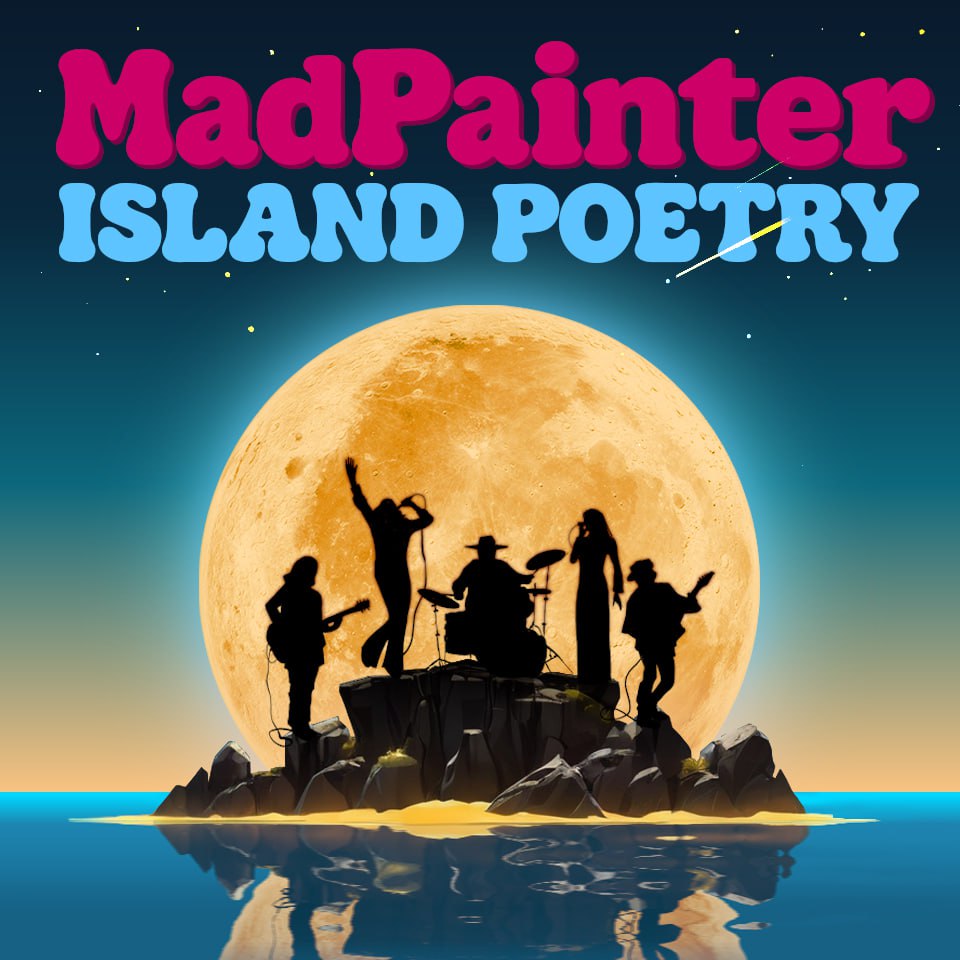
Boston-area rock quintet Mad Painter will release their third studio album, "Island Poetry," via Epictronic. The album follows 2023's "Splashed" and marks the band's heaviest and most cohesive work to date, with the current lineup writing the bulk of the material specifically for this record.
About the Album
Where "Splashed" drew on a wider vault of older and newer material, "Island Poetry" is more focused, shaped by the current Mad Painter lineup as a unified group effort. The album's concept centers on the image of island inhabitants gathered around a campfire on a tropical beach under a full moon, chanting and meditating in a shared communal and spiritual ritual. That imagined setting is where the album's "poetry" originates, echoing the romantic idea of withdrawing from ordinary pressures to create freely — in the spirit of artists such as Kevin Ayers, who retreated to an island to make music at his own pace.
Musically, the album is rooted in 1970s British rock, built around Hammond organ, guitar, bass, drums, and layered vocals. Across its twelve tracks, "Island Poetry" moves through Deep Purple-inspired hard rock, Status Quo-style boogie, Rainbow-esque drama, Queen-like theatricality, Wishbone Ash-style roaming textures, Motörhead-inspired heaviness, Moody Blues / Barclay James Harvest-style art rock, and the space-disco flavor of "Nektarized." The focus track, "Spin Your Ventilator," delivers an energetic, unruly, double-entendre-driven hard rock attack in the spirit of Brian Johnson-era AC/DC.
The album was recorded track by track by Tom Hamilton at Lowell Street Sound in Peabody, Massachusetts, where Hamilton also handled production and mixing. The Pro Tools-based sessions were built to achieve a warm, natural, analog-style sound rather than a sterile digital polish. Six of the album's twelve tracks feature lyrics by writer and music journalist Dmitry M. Epstein, and the record closes with a faithful interpretation of Uriah Heep's "Circle of Hands" — a fitting finale for a band whose identity is closely tied to Hammond-driven classic rock.
Get a taste of the heavy, unruly energy of the new album and check out the single & Video “Spin Your Ventilator”.
About Mad Painter
Mad Painter is a Boston-area rock band devoted to the weight, color, and melodic ambition of classic 1970s rock. Led by vocalist, keyboardist, songwriter, and concept creator Alex Gitlin, the group builds its sound around roaring Hammond organ, hard-driving guitar, muscular rhythms, layered vocals, and warm analog-style production.
The band's music draws heavily from the golden age of British hard rock, progressive rock, glam, boogie, and blues-based album rock, with Deep Purple and Uriah Heep as central reference points — particularly in the use of Hammond organ as a lead instrument rather than background texture. Elements of Rainbow, Queen, Status Quo, Wishbone Ash, Motörhead, Nektar, Moody Blues, Barclay James Harvest, AC/DC, Spooky Tooth, and Atomic Rooster also run through the band's vocabulary.
The current recorded lineup features Alex Gitlin, drummer Al Hendry, bassist Kenne Highland, guitarist Al Naha, and backing vocalist Julie Gee, with Sharon Crumrine appearing as additional backing vocalist on "Island Poetry." Together, they make vintage-minded but not nostalgic music: dramatic songs, heavy riffs, melodic hooks, and expansive arrangements, played with conviction.
1. Debt Collector
2. Empty Bottles
3. Spin Your Ventilator
4. Suit Of Worries
5. You Dreamed I Was In Love
6. Nektarized
7. Shadow of the Words
8. Two Horsemen
9. Tommy Lost It All
10. I Am The King
11. Stand Your Ground
12. Circle Of Hands

Mad Painter “Island Poetry” – RGM Magazine Album Review
While half the industry searches TikTok for its next personality crisis, this Boston outfit have gone rummaging through the seventies and returned carrying a Hammond organ, several armfuls of guitar leads and the unshakable conviction that every decent record should sound like it might catch fire.
Their new album, Island Poetry, is proudly out of time. Released through Italian independent label Epictronic, it draws openly from Deep Purple, Status Quo, Rainbow, Queen, Wishbone Ash and Uriah Heep. That list could be evidence for the prosecution if Mad Painter were merely impersonating their record collection. Fortunately, humour and full-band sweat are here to prevent the album becoming a tribute night in a suburban pub. Or is it?
Debt Collector begins with the Hammond and guitars shouldering one another for room. The Deep Purple influence is hardly concealed, but the performance has genuine urgency. Rather than carefully recreating a vintage sound, the band play as though the seventies never finished. Its central riff is ok, could do with a bit more punch but hey ho, the arrangement could be trimmed. Mad Painter occasionally confuse giving a song everything with knowing exactly what it needs.
Empty Bottles is leaner and better for it. Its Status Quo-style boogie does not require a philosophical explanation; it puts its boots on the table and gets moving. The directness provides an effective contrast to the album’s grander moments.
Spin Your Ventilator follows with the blunt-force economy of Neil Young built around a riff that understands repetition is useful when the thing being repeated is worth hearing. A tighter dirtier production might have made it hit harder, however. The warmth is appealing.
Suit of Worries returns to heavier Hammond territory and carries itself with theatrical unease. The title is strong, the playing muscular and the lyrics give the song more character than another exercise in vintage riff worship would possess. At times, though, the keyboard and guitar occupy so much of the same space that neither lands with maximum force. More separation in the mix would allow their argument to become properly vicious.
The magnificently titled Last Night You Dreamed I Was in Love With Someone Else brings a touch of Rainbow’s widescreen melodrama. It is excessive, jealous and entirely comfortable wearing a cape. The song would benefit from a sharper vocal climax, the mix isnt great here too. If you are going to build the castle, somebody eventually needs to stand on its highest tower.
Nektarized makes the album’s strangest turn, swapping hard-rock earthiness for space-disco shimmer. Its Ganymed-inspired pulse should be ridiculous; instead, it provides a welcome flash of silver amid all the brown leather and valve amplifiers.
Shadow of the Words then throws open the curtains for some Queen-sized drama, complete with layered voices and an arrangement determined to make every entrance count. The vocal stacks are impressive, though another round of editing would help. Queen’s extravagance worked because their chaos was ruthlessly organised; Mad Painter sometimes leave the furniture where it fell.
Two Horsemen brings bass and electric guitar interplay into focus. A bit like The Doors. The Wishbone Ash influence is obvious, but Alex Gitlin and Al Naha treat harmony as conversation rather than decoration. The track breathes more naturally than some of the album’s denser material, showing that the band are at their best when each player has a distinct role.
Tommy Lost It All is more recognisably Mad Painter. There is wit in the storytelling, but also a lived-in sadness beneath the swagger. It suggests the group should trust their own identity more often. Their influences are a sturdy foundation, not a ceiling.
I Am the King reaches towards the stately melancholy of the Moody Blues. Piano and layered vocals soften the album’s harder edges without turning sentimental. Its measured pace is welcome, although the song takes slightly too long to arrive at its emotional point.
Stand Your Ground responds by kicking the door off its hinges. With Motörhead speed and aggression behind it, the performance becomes rougher, louder and less mannered. It is one of the record’s strongest moments precisely because there is no room for ornamental clutter.
The closing Circle of Hands tackles the Uriah Heep classic. Mad Painter are clearly playing on home territory, and the Hammond-rich arrangement suits them perfectly. Yet ending with a cover is a curious decision on an album meant to represent the band’s most ambitious statement. The performance is powerful, but it hands the final word to their heroes when Mad Painter have spent eleven tracks proving they deserve to speak for themselves.
The production captures the warmth of musicians playing together rather than assembling files remotely, and Al Hendry and Kenne Highland provide the dependable engine such densely arranged music requires. Backing vocalists Sharon Crumrine and Julie Gee add colour without merely doubling what is already there. Dmitry M. Epstein’s lyrical contributions bring wit and dramatic imagery, helping the record avoid becoming nothing but a museum of riffs.
Mad Painter know the old language fluently, but the finest passages occur when they bend it, as on Nektarized, or stop announcing their inspirations altogether, as on Tommy Lost It All. A little more editing, a rougher mix in places and greater confidence in their own oddness would turn a very good retro-rock album into something genuinely singular.
https://rgm.press/mad-painter-island-poetry-album-review/review/
Loop Solitaire reviews island poetry
Mad Painter Keep 70s British Rock Alive With Analog Heart and Live-Band Power
Mad Painter are clearly a band that understand the language of classic rock from the inside. The Boston-based group build their sound around the weight, groove, and theatricality of 1970s British rock, but what makes the project work is not just the reference points. It is the chemistry between the musicians, the warmth of the production, and the feeling that these songs are being played by a band that knows how to move together.
The classic rock foundation is strong throughout, with a blues-rock groove running underneath the guitars, drums, vocals, and Hammond organ. The band’s energy is very front-facing, with a hard-rock drive and a slightly more central organ presence that naturally brings Deep Purple to mind. That choice gives the music a dramatic and very recognisable character, while the guitars and rhythm section bring the necessary grit and drive.
The album opens with “Debt Collector,” where the band immediately leans into a much bluesier impact. The guitar and drums feel closely tied together, with patterns that follow each other in a way that brings out that classic blues-rock rhythm without sounding too predictable. It is a strong opening because it puts the groove, the playing, and the band’s chemistry right at the front.
Around the middle of the album, “Last Night, You Dreamed I Was in Love with Someone Else” brings a more urgent energy. The lyrics stood out immediately, touching on the tensions and emotional messiness of love, while the faster guitar and drum patterns give the track a strong push. Some parts of the verse feel more relaxed, but the band know how to loosen the rhythm without losing momentum. The vocal melody is especially catchy, strong and melodic rather than simply aggressive, which creates a great contrast with the more driving instrumentation.
Later on, “Stand Your Ground” pushes even harder. The voice feels more insistent here, the guitar takes a leading role in several sections, and some of the riffing carries a Motörhead-like punch. It feels like one of those tracks that would really move people live, with the kind of chorus that could easily become a crowd moment.
By the end, “Circle of Hands” closes the album in a slower but very powerful way. The guitar riffs guide the atmosphere, while the vocals keep the track uplifting, especially through lyrics that bring a sense of hope. The organ lifts everything even higher, making it feel like the right final statement for the album.
The production has a beautiful analog warmth, giving the songs a sound that feels connected to the 60s and 70s without becoming too raw or dated. There is still a clean quality in the performances, melodies, and mix that makes the album very enjoyable for modern ears. That balance is important: Mad Painter keep the impact and personality of vintage rock, but with enough clarity to let every part land properly.
The band’s energy also feels very close to a live experience. Even in the recorded versions, there is a sense of movement and physical presence, as if the songs would become even more powerful on stage. Some tracks lean into slower, almost ballad-like territory, while others push harder into fast, driving hard rock, but the heart of the project remains consistent.
Mad Painter deliver a strong and convincing rock sound, full of musicianship, analog character, bluesy groove, and theatrical classic-rock ambition. For listeners who love that era of Hammond-led, performance-driven rock, this is a band absolutely worth hearing.
Allen Peterson reviews Island Poetry
Mad Painter – Island Poetry Review: Classic Hard Rock Meets Timeless Lessons on Life and Unity.
Mad Painter is a Boston area rock band formed by songwriter, singer and organ player Alex Gitlin to pay homage to the vintage sounds of rock and blues of the 1970s. The band contains veteran local musicians, bassist Kenne Highland, drummer Al Hendry, guitarist Al Naha and backing singers Julie Gee and Sharon Crumrine. They convey the pleasure and energy of bygone decades, with massive organ sounds, trippy grooves and enormous songs. They have previously gained a dedicated audience with previous music, such as the album Splashed and the single “Debt Collector.” Releasing their outstanding new album Island Poetry, they are back again with their old school flair and energetic stage appearances.
In a music world of fast trends, Island Poetry, the new album by Mad Painter is a true and honest work of art. Island Poetry’s big notion is that human life is something like a succession of little islands. Everyone has moments of dread, hope, and exhaustion on their own island, yet they are all connected by a large, shared ocean of human feelings. The band eschews simplistic party tunes in favor of sharing valuable lessons about life, courage and togetherness using vintage instruments like booming Hammond organs and electric guitars.
Island Poetry begins with the lead single, “Debt Collector.” On the surface it sounds like an intense chase, but it’s actually full of stinging sarcasm and satire. The words are a slight parody of the crazy wild thoughts of an overdramatic teenager. The song humorously shows how stupid extreme selfish thinking may be, rather than take these wild thoughts seriously. The music complements this crazy energy with a quick blues-rock pace, growling Hammond organ sounds and piercing guitar riffs that give the piece plenty of attitude and humor.
The Island Poetry then goes into “Empty Bottles” a song directly inspired by the quiet struggle of the 2020 lockdowns. Back then a lot of folks felt lost, lonely and tempted to throw in the towel and drown their sorrows. But the true meaning of the song is to pick strength over despair. It reminds us that even when we feel empty within, we can hold on because there is always light at the end of the tunnel. Bright major-key guitar chords, warm organ tones, and an optimistic chorus turn a tragic circumstance into a strong hymn of optimism.
As Island Poetry progresses, “Spin Your Ventilator” takes the macabre satire of the album to another level. It won’t lull you with a soft dreamy tune but rather throws you straight into the insane racket and hectic overthinking of life today. Musically it’s built on a hard-hitting, driving AC/DC style hard rock groove. Heavy guitar riffs and hammering rhythm function like a big machine, blasting away unwanted ideas and wiping out poisonous mental energy with pure rock force.
“Suit Of Worries” dives into deeper personal space, discussing the hefty mental armor humans construct to shield themselves from pain. The song tells us that the walls are built to keep the suffering out, but they frequently imprison us inside and keep out true love and friendship. The lesson is that true security is to be found in openness and honesty, not in hiding behind fear. The music employs dark, dense organ chords to evoke the heavy iron suit but slowly expands with soaring guitar solos that seem like breaking free from a heavy weight.
For a bit of fun and to go a little further afield, “Nektarized” takes the record into a late ’70s “space disco” feel. The words are brilliantly assembled from song and album titles of the famous progressive rock band, Nektar. Rather of taking itself too seriously, the tune mixes shimmering synths, floating basslines and groovy rhythms for a beautiful, weightless sensation. It invites the listener to quit overthinking everything and just enjoy the joyful, sweet side of life and music.
Drawing on classical literature and poetry, “Two Horsemen” ponders the nature of time and fate. The song doesn’t see the two horsemen as fearful signs of doom, but rather sees them as natural side-by-side forces of life, like light and dark or birth and death. The message is to accept the changes of life with tranquil peacefulness. The music is a loud rocking affair mixed with soft movie like moods. Twin guitars and a steady rhythm that sounds like moving over an open land.
The collection Island Poetry ends with the poem “I am the King,” which tackles, in deeply intimate terms, the issues of faith, human limitations, and the universe. The singer meditates on the ever-present God who created the whole cosmos, stars and oceans. Meanwhile the song wrestles with a terrifying thought: what if all this is only inside my head? This generates an extreme contradiction between being the “King of everything” vs the “King of nothing.” The music reflects this tension between cosmic force and human insignificance with strong rock riffs and dramatic breakdowns.
The album peaks with “Circle Of Hands”, a loving tribute to the iconic Uriah Heep song and tying all the themes of Island Poetry together. The tune shows that when we join hands and help each other, no person has to stay an isolated island. It makes the listener feel protected, hopeful and connected. The music rises like a spiritual ceremony, starting with calm organ sounds and building into a vast, loving chorus of voices and guitars.
Island Poetry by Mad Painter is ultimately a really creative and significant rock album. Combining honest real life stories, smart sarcasm, space-disco joy and serious philosophical problems with authentic 1970s rock sounds, the band delivers something absolutely exceptional. From the scathing wit of “Debt Collector” to the inspiring togetherness of “Circle of Hands,” Island Poetry illustrates the lasting ability of real rock music to guide, comfort and unite.
https://allenpetersonreviews.com/mad-painter-island-poetry-review-classic-hard-rock-meets/
Mad Painter Island Poetry Review by Edgar Allan Poets
https://www.edgarallanpoets.com/mad-painter-island-poetry-review/
The opening track, “Debt Collector,” drops the listener straight into authentic rock. There’s something audacious about a band playing this kind of music in the 21st century, and Mad Painter own it completely. The song sets the tone: unapologetic, rooted, and alive.
Following that is “Empty Bottles,” another adrenaline-fueled piece. It carries an instinctive, foot-on-the-floor energy that recalls the likes of Smokie and Status Quo. The rhythm drives the track relentlessly forward, evoking a sense of urgency that pulls you in from the first bar.
Next up is “Spin Your Ventilator,” which leans on a raw guitar sound. The riffs have an irresistible quality that compels the listener to surrender to the music. This track makes you want to let go and ride the waves of rock with abandon.
Island Poetry – Sound and Atmosphere
The psychedelic textures of “Nektarized” follow, bringing more intricate rhythms into play. The drumming here isn’t rooted in the usual rock traditions at all — it’s space disco, that specific late-’70s and early-’80s genre that recalls artists like Sheila and B. Devotion, Ganymed, and Amanda Lear. The solos turn the whole thing into a mesmerizing trip.
“Shadow Of The Words” opens with an insistent piano and a soaring vocal that carries something genuinely psychedelic, almost like a visionary oracle. It’s a song built on constant harmonic variation and a singular intensity. What struck me most is the pressing rhythm and the ceaseless harmonic and rhythmic shifts that make it a kaleidoscopic experience.
Then comes “Tommy Lost It All,” a heartfelt ballad that showcases the band’s range. The song has a nostalgic quality that feels neither forced nor cliché. Its harmonic progressions make it one of the album’s standout moments.
“I Am The King” begins with a beautiful piano figure and then strings with an unmistakable ’80s vibe, creating an atmosphere close to a film score — a kind of mirage. It’s a truly intense ballad that reaches right into your soul, with those Hammond notes shaping melodies that carry you far away and set you traveling.
The album takes a turn with “Stand Your Ground,” which has a gritty edge. This standout track folds in punk influences to create an explosive energy—the retro sound stays timeless, making it land with both longtime and newer rock audiences.
The album closes with “Circle of Hands,” Mad Painter’s interpretation of the Uriah Heep classic. The version keeps the rock patina of the original — the sound is a little more present here, but the core of the song is preserved and honored impeccably.
Island Poetry – Performance and Production
Mad Painter’s “Island Poetry” is a direct and fantastic album. Each song presents a different facet of rock music, and the craftsmanship on display will resonate with listeners who appreciate authentic musical expression.
The varied tempos and styles across these songs make for a rich listen. This is not just a collection of tracks but a journey through different emotions, and the band moves through them with real conviction.
Overall, “Island Poetry” captures what makes rock music vital. From the frantic energy of “Empty Bottles” to the reflective tones of “Tommy Lost It All,” there’s something here for everyone. The cohesive feel of the album invites repeated listens and deeper exploration.
Mad Painter have delivered a work that stands on its own terms. The sheer nerve of committing to this sound today gives the whole record its charge, and it will appeal to old-school rock fans and curious newcomers alike.
Chase the energy here, and let it take you on an unforgettable ride. The craftsmanship shows a deep respect for the genre’s roots. The album will be released on October 1, but you can already listen to some of its singles, including “Debt Collector.”
Songplode reviews "Spin Your Ventilator" and our upcoming album, "Island Poetry".
Mad Painter Turn Hammond Fire Into A Full-Band Album Statement
Mad Painter treat 1970s rock less like costume than a working language, and “Spin Your Ventilator” offers an early glimpse of where Island Poetry is heading. Due October 1, 2026, the album finds Alex Gitlin and company building around roaring Hammond organ, hard guitar, muscular rhythm and harmonies that lean theatrical without losing their grit. Deep Purple muscle, Uriah Heep drama and flashes of early Queen all sit within warm, analogue-style production that leaves room for the band to breathe.
The wider record promises considerable range. “Debt Collector” and “Suit of Worries” carry Purple-sized heft, while “Empty Bottles” leans into Status Quo boogie and “Stand Your Ground” pushes toward Motörhead bite. Twin-guitar shimmer, space-disco turns and classic-rock grandeur broaden the frame, positioning Island Poetry as Mad Painter’s most expansive statement to date.
Rock Era reviews Island Poetry
Mad Painter has spent years building a reputation in Boston as a band devoted to the weight and theatrics of 1970s British rock, and Island Poetry, out October 1st through the Italian label Epictronic, is their most ambitious swing at that sound yet. Led by songwriter, vocalist, and keyboardist Alex Gitlin, backed by drummer Al Hendry, bassist Kenne Highland, and guitarist Al Naha, with newer additions Sharon Crumrine and Julie Gee on backing vocals, the band leans on Hammond organ as a genuine lead instrument rather than texture, the same way Deep Purple and Uriah Heep once did. Across twelve tracks, each one built from a different reference point in that era, from Status Quo boogie to AC/DC’s leaner drive to Queen’s theatrical sweep, the album was recorded with a full band playing together and warm, analog-style production, six of the tracks carrying lyrics from music journalist Dmitry M. Epstein.
Overall, the album has a very hopeful tone and feels like a huge-sounding jam, yet not random or directionless. It feels like a jam in the way the band has impeccable chemistry. It sounds like the way rockers used to write songs back in the day, so it is vintage in that sense, but it definitely is not nostalgia bait; the narrative has nothing to do with the good old days, and there are many attempts to innovate here with harmonic choices and tonal and textural choices as well.
“Debt Collector” is the first song on the album, and while it defines the album’s sound and sets the tone, it doesn’t burn all the cards in one go and leaves many surprises to be had throughout the album. It shows that bluesy foundation of the band members as the song starts with a very well-worn bluesy rock rhythm, but it doesn’t stagnate in it for long; the band jumps into a very catchy chorus with a clever call and response between the vocals and the band that is incredibly well executed.
“Empty Bottles” is probably the brightest song I’ve heard with that kind of title and discussion about empty bottles, with the chorus literally spelling out that you should just try again because you can do anything you set your mind to. The rock sound, driven by that organ, makes it not cheesy; it doesn’t sound like a nursery rhyme or a cheesy pop song because of that rock shuffle pushing the momentum forward.
“Suit Of Worries” has a really catchy bluesy intro melody played on a very specific electric piano sound, complete with drum stops to emphasize its rhythmic accents and then smoothly transitioning into the verses. Man, this would be a great song to listen to live.
“I Am The King” is the height of the dramatic flare the band has a knack for that has been showcased in some of the songs leading up to this. It’s the longest song on the album, a 6-minute epic with incredible storytelling and pacing. I was very pleasantly surprised with the harmony here, as it complements the sorrow expressed in the lyrics as the king of tears tells his story, but also the entire band shifts into a brighter sound when it fits thematically; it’s like a theatrical play in that way.
Twelve tracks and this many reference points could easily have turned into a scattered tribute record, but Island Poetry holds together because the band’s own chemistry stays the constant underneath all the borrowed vocabulary. This is Mad Painter’s most varied release to date, and it earns that variety rather than just claiming it. For a band that plays this style of rock live with the energy the press materials describe, it’s easy to hear how these songs would translate to a stage, and Island Poetry stands as a genuinely strong entry point for anyone who still wants a Hammond organ pushed all the way to the front.
Michael Alahverdian reviews Island Poetry
The music of today can be so repetitive and AI-manufactured that we are almost forced to return to the glory days of music, when bands such as Deep Purple, Uriah Heep, and so many others were such a joy to listen to.
But there is hope for us 70s music aficionados: Mad Painter is about to release Island Poetry, and it delivers with the originality that we love. Alex Gitlin is the songwriter and creator of the band’s concept. He is backed by drummer Al Hendry, bassist Kenne Highland, guitarist Al Naha and backing vocalist Julie Gee. Also sharing her talent on this album is Sharon Crumrine, contributing backing vocals. Mr. Gitlin gets the most out of this group of fine musicians.
There are so many wonderful songs in this 12-song set that everyone will find a favorite that they will enjoy listening to. The opening of Suit Of Worries brought me back to the heyday of the late, great Jon Lord and his fantastic sound that made Deep Purple one of the most popular bands of all time. Another song that rocks is the very long-titled but uniquely named “Last Night You Dreamed I Was In Love With Someone Else”.
Mad Painter adds the perfect touch of theatrical style to their songs, including Spin Your Ventilator, Shadow Of the Words, and the Uriah Heep classic, Circle Of Hands. Two Horsemen is another favorite, a beautiful, almost jazz-inspired song that reminded me of a soundtrack from a 1960s movie, such as The Graduate. The sad storyline of Tommy Lost It All may have you reaching for a tissue, which includes some emotional and passionate musicianship from the entire band. The opening of I Am The King showcases the incredible talent and writing of Mr Gitlin, as his beautiful piano work sets the stage for one of the best songs on the album. Debt Collector, Empty Bottles, Nektarized, and Stand Your Ground all have a different style and message for the discriminating listener who becomes easily bored with bands that write songs that all sound the same.
Alex Gitlin and Mad Painter perform songs that are unique and different from most of today’s music. One of the things that I was most impressed with was the way each musician did their own thing, meaning you can clearly hear each instrument, but like a great recipe, when everything comes together, the end result is spectacular.
indiemusicflix delves into Spin Your Ventilator
There are some kinds of rock songs that have no interest in trying to modernize themselves. They step confidently into the past, borrow the swagger, groove, and theatricality of psychedelic rock while trusting that timeless riffs never really go out of style. Spin Your Ventilator, from Mad Painter's album Island Poetry, does exactly that.
The song wastes little time establishing its identity. A swirling guitar riff drives the opening. It is quickly joined by drums and a Hammond organ that becomes one of the track's defining voices. The organ pushes the arrangement forward and adds a texture that immediately recalls the psychedelic and hard rock movement of the late 1960s and early 1970s. The production intentionally embraces a vintage sound, drawing inspiration from bands like Deep Purple, Uriah Heep, and early Alice Cooper while still maintaining Mad Painter's own identity.
With the structure, Spin Your Ventilator moves heavily on groove rather than constant escalation. The verses settle into a hypnotic rhythm before opening into a chorus that feels built for live audiences to sing along with. The song understands that memorable rock comes from conviction and strong musicianship rather than constant reinvention. Each section flows naturally into the next, allowing the energy to build before an extended instrumental passage showcases the band's chemistry.
When it comes to the vocals, Alex Gitlin performs with the confidence of classic rock. His delivery is expressive. Behind him, the backing vocals add depth and create a contrast that gives the chorus extra weight. Together, the performances evoke the spirit of '70s arena rock while still feeling distinctly like Mad Painter. The interplay between the vocals, Hammond organ, and guitar keeps the song lively from beginning to end.
The song is a good fit for a movie like Dazed and Confused, a 1993 coming-of-age comedy-drama directed by Richard Linklater.
Music On The Rox reviews Island Poetry
If someone told you Island Poetry was a long-lost record cut in the mid-1970s and only just discovered, you would believe it without a second thought. That is the highest compliment you can pay a band working in this tradition, and Mad Painter earn it completely. The spirit is real, the heart is real, and above all the music feels authentic rather than costumed. Plenty of modern retro-rock bands reach for the essence of classic hard rock. Very few actually catch it. Mad Painter catch it and hold on.
The Boston-based band, led by songwriter, vocalist, and keyboardist Alex Gitlin, has never hidden its devotion to the golden age of British hard rock, and Island Poetry is the fullest realization of that vision yet. What keeps it from being a nostalgia exercise is how alive it sounds. These are not museum-piece recreations. They are vibrant, passionate performances by a band that plays this music because it is genuinely in their blood.
From the opening moments of Debt Collector, you are dropped into a world where Hammond organs roar, guitars sing, and every performance feels genuinely alive. The Deep Purple influence is unmistakable, but the band injects enough personality to make the song their own rather than a tribute. The very first thing that jumps out is the drum sound, warm, organic, and punchy in exactly the way the classic Deep Purple records of the 1970s were. In an era of overly polished, grid-locked production, hearing drums breathe like this is genuinely refreshing.
The album keeps its standard high across Suit of Worries, Empty Bottles, and Spin Your Ventilator, each exploring a slightly different corner of classic rock while holding onto a cohesive identity. Last Night You Dreamed I Was in Love with Someone Else is a particular highlight, pairing strong melodies with a dramatic atmosphere that recalls Rainbow at their finest. Shadow of the Words brings genuine theatrical flair, and Two Horsemen shows off excellent twin-guitar work that adds real depth and richness to the record.
One of the album’s greatest strengths is Alex Gitlin’s voice. He frequently brings to mind a seasoned David Coverdale, carrying both power and emotion with remarkable confidence, equally convincing on the hard-charging passages and the more melodic moments. He is consistently one of the most compelling elements on the record.
The Hammond organ deserves its own paragraph. Rather than sitting in the background as decoration, it stands proudly at the center of the music, driving songs forward and supplying the kind of character that defined so many legendary albums of the era. The organ work throughout Island Poetry is simply outstanding, and it is a large part of what gives the record its authenticity.
The back half keeps delivering. Nektarized, Tommy Lost It All, I Am the King, and the energetic Stand Your Ground all showcase the band’s versatility and songwriting range. And the closing cover of Uriah Heep’s Circle of Hands is a perfect finale, paying homage to one of Mad Painter’s key influences while sitting comfortably alongside the original material that precedes it.
What amazes most is that this music is being made in 2026. Listening to Island Poetry, you could easily believe it emerged straight from the golden age of British hard rock, and yet it never feels trapped in the past. The musicianship, the songwriting, the production, the vocals, the Hammond organ, and the overall atmosphere all come together into one of the most purely enjoyable classic rock albums to surface in recent memory. Records like this have become far too rare. For fans of Deep Purple, Uriah Heep, Rainbow, and the great rock albums of the 1970s, Island Poetry is an absolute must-hear.
https://musicontherox.com/mad-painter-island-poetry-album-review-preview/
Lelahel Metal review of the forthcoming Mad Painter album, Island Poetry
From the very first listen to Island Poetry, I was genuinely surprised. In fact, for a few moments, I thought I had downloaded the wrong album. The reason? Mad Painter have managed to recreate the spirit of the 1970s so convincingly that you instantly feel transported half a century back in time. The sound, the performances, the songwriting, the production, and above all the musicianship all breathe the atmosphere of classic rock’s golden era.
Another detail that immediately caught my attention is the album’s format itself. Twelve tracks and a running time that comes close to an hour; a standard that was common in the 70s but has become increasingly rare today. While I would have personally preferred a more retro-inspired artwork to fully match the musical content, that remains a matter of artistic choice. What truly matters is the music, and there is plenty to unpack here.
The album opens with “Debt Collector”, a classic blues-rock number driven by rich Hammond organ textures and excellent backing vocals. The singer immediately reminds me of David Coverdale, and that is a compliment of the highest order. Midway through the track, the Deep Purple-inspired organ solo appears and instantly sends us fifty years into the past. The guitar solo that follows is dirty, bluesy, and perfectly measured. No unnecessary technical showmanship — just pure feeling.
“Empty Bottles” continues the journey with a melodic riff and a strong 70s rock atmosphere. The chorus is elevated by layered vocal harmonies and tasteful guitar phrases. Once again, the guitarist demonstrates that memorable melodies matter more than flashy technique. The opening riff returns at the end, leaving the listener humming it long after the song finishes.
On “Spin Your Ventilator”, the guitar and organ interplay becomes the star of the show. The rotating groove almost feels like the spinning blades of the title itself. The instrumental break, featuring both instruments in a melodic dialogue, is one of the album’s most enjoyable moments.
Then comes my personal favorite, “Suit of Worries”. As a lifelong Deep Purple fan, I cannot hide my enthusiasm here. The spirit of “Black Night” is unmistakable, and at times it genuinely feels as if Ritchie Blackmore himself had a hand in the composition. The organ work is magnificent, and the nostalgic atmosphere is irresistible.
“Last Night You Dreamed I Was in Love with Someone Else” proudly wears its Rainbow influences. The instrumental section is beautifully crafted and allows the band to stretch out creatively. The fade-out ending is another delightful old-school touch rarely heard today.
The album’s centerpiece, “Nektarized”, embraces a space-disco vibe with confidence. Dynamic drumming, unexpected tempo changes, and a wonderful organ-guitar duet create a cosmic journey that feels both playful and immersive.
The theatrical “Shadow of the Words” channels Queen through its piano introduction and operatic vocal approach. Mad Painter deserve credit for successfully paying tribute to multiple classic influences while still sounding cohesive.
“Two Horsemen” offers a calmer, blues-oriented moment centered around organ melodies, providing a welcome breather before the emotional “Tommy Lost It All” and the majestic ballad “I Am the King”.
The energy returns with “Stand Your Ground”. While I do not necessarily hear Motörhead, I absolutely hear power, urgency, and some outstanding drumming that recalls the great classic rock giants.
Finally, the album closes with “Circle of Hands,” a cover of the Uriah Heep classic. Remarkably, Mad Painter make the song sound so authentic that one could almost believe it predates the original recording.
In the end, Island Poetry is an album that dares to be unapologetically old-school. It celebrates the heritage of classic rock without sounding like a museum piece. Every track contributes something meaningful, and the musicians clearly poured their hearts into this project. In an era increasingly dominated by algorithms, shortcuts, and artificial intelligence, albums like this remind us why genuine musicianship still matters. Mad Painter took risks, embraced their influences, and delivered a rich, diverse, and highly enjoyable record. Quite simply, they don't make many albums like this anymore.
Carlo Bellotti, head of the Epictronic label (on which Island Poetry will be released in 2026) with a sneak preview of the album
Carlo Bellotti, head of the Epictronic label
(on which Island Poetry will be released in 2026)
with a sneak preview of the album.
I’ve had the chance to spend quite a bit of time with Island Poetry, and I have to say that I came away genuinely impressed. It’s not often that I hear an album capable of capturing the spirit of the great rock era while still feeling authentic and enjoyable today. With influences from progressive rock, glam rock and the classic rock scene of the 1970s, with bands such as Deep Purple, AC/DC, Rainbow and Uriah Heep. What I appreciate the most is that these influences are not just words in a biography, they are truly reflected in your music.
From the very first moments of the album, it is clear that you understand what made those legendary bands so special. The opening track “Debt Collector” immediately transported me back in time. Listening to it felt like standing in front of the stage during the golden era of rock in the late '70s and early '80s. It captures that atmosphere remarkably well while still sounding fresh and alive. “Empty Bottles” is another beautifully composed track. The songwriting feels natural and confident, and every instrument has its own place without ever losing the energy of the performance. One of the biggest surprises for me was “Spin Your Ventilator.” The song instantly brought to mind the free spirit of the hippie generation. Beyond its musical qualities, I also found the lyrics particularly well written and perfectly suited to the mood of the composition.
The songs “Suit Of Worries” and “Last Night You Dreamed I Was In Love…” completely won me over. These tracks demonstrate outstanding musicianship, memorable melodies and the kind of songwriting that reminds me why bands like Deep Purple became legends. Personally, these two songs alone convinced me that Mad Painter deserves to be mentioned alongside the classic names that inspired them.
I also thoroughly enjoyed “Nektarized.” The melody, rhythm and lyrics come together beautifully, creating one of the album's most engaging moments. “Tommy Lost It All” and “I Am The King” were the other two emotional highlights. Listening to them genuinely made me feel like I was twelve years old again, sitting next to my father's cassette player and discovering classic rock for the very first time. Few modern bands manage to recreate that feeling, and you have done it remarkably well.
“Stand Your Ground” brings another burst of energy. I can clearly hear the Motörhead influence, but rather than sounding like imitation, it feels respectful while maintaining your own identity. The album concludes with the Uriah Heep cover, “Circle Of Hands”, a perfect closing track. True to its title, it left me wanting to start the album all over again, which is always the sign of a well-constructed record.
The production deserves special recognition as well. The mix and mastering strike an excellent balance between modern clarity and the warm, organic character that classic rock demands. Nothing feels overproduced, the sound remains dynamic, natural and faithful to the style. I also really enjoyed the album artwork. It's an original concept that complements the music and gives the album even more personality.
What impressed me most is that today it has become increasingly rare to find bands willing to embrace this style with such conviction. Many are inspired by the great rock legends, but very few capture the same passion, authenticity and musical spirit. Mad Painter is one of those rare exceptions.
For me, this isn't simply a nostalgic tribute to classic rock. It is a band that understands the essence of that era and brings it to life with personality, musicianship and genuine passion.
I can honestly say that I see Mad Painter standing comfortably alongside the classic influences that shaped them, while still sounding like themselves.
Mad Painter – “Spin Your Ventilator”

Power Play Magazine Issue 280


Mad Painter’s New Single, Debt Collector, Revives 70s Rock Glory
Mad Painter’s Debt Collector is a powerful, blues-rock single that delivers a vintage 1970s sound with modern energy, solidifying their status as a leading classic rock revival band.
Mad Painter storms onto the scene with “Debt Collector,” a visceral blues-rock powerhouse now unleashed on all major streaming services. This electrifying single, the second taste of their eagerly awaited album “Island Poetry,” reaffirms their position as the rightful heirs to classic rock’s legacy.
the best creativity magazine in the UK, the best book magazine in the UK, the best arts magazine in the UK, the best entertainment magazine in the UK, the best celebrity magazine in the UK, book marketing UK, book promotion UK, music marketing UK, music promotion UK, film marketing UK, film promotion UK, arts and entertainment magazine, online magazine uk, creativity magazine
Drawing inspiration from the titans of rock, Nazareth and Deep Purple, “Debt Collector” plunges listeners into a swirling vortex of raw emotion and vintage sonic textures. Dmitry M. Epstein’s poetic lyrics lend a profound depth to the band’s signature gritty sound. Captured in the hallowed halls of Tom Hamilton’s Peabody studio, the track resonates with the authentic warmth of rock’s golden era.
A standout moment is the commanding Hammond organ, driven through a roaring Marshall amplifier, a deliberate and powerful tribute to the iconic Jon Lord. This sonic alchemy, combined with relentless rhythms and soul-stirring vocals, creates a truly immersive and unforgettable listening experience.
Debt Collector in Headbangers News
https://www.headbangersnews.com.br/noticias/mad-painter-lanca-single-debt-collector/
Mad Painter have been making waves on the rock scene with several singles released throughout the year. Continuing their super career, they deliver the engaging single “Debt Collector”. After the release of their last album 'Splashed' in 2023, the band returned with the second single from the upcoming album. The single features lyrics written by poet Dmitry M. Epstein, adding a poetic depth to the band's music. Recorded at Tom Hamilton's studio in Peabody, the production of 'Debt Collector' encapsulates the nostalgic vibe of the early 1970s,
The song presents an unapologetic band that only draws inspiration from their instinct and creativity, where it is possible to notice the spiritual, bold and chaotic ideology along with the unique sound, which brings a nostalgic sound atmosphere while exuding a sincere freshness thanks to the youthful energy and visionary mind of the members who have an innovative approach to their sound.
“A standout feature of this release is the use of a “rough” Hammond organ through a Marshall amp, a tribute to the legendary Jon Lord. Mad Painter’s innovative approach to their music sets them apart in the contemporary music scene, making ‘Debt Collector’ a must-listen for fans of classic rock with a modern twist,” comment the band.
“Debt Collector” captures the essence of timeless moments and connections through an energizing experimental track that captures the listener’s attention through composition and instrumentation, allowing for more emotion in a deeply personal exploration, perfect for fans of Deep Purple, Nazareth…
The single is a fervent and expressive fusion, a conceptual satisfaction of an eclectic mix of ideas, which bring the sonority of classic and psychedelic rock from the 70s, proving that the band knew how to use all their influences and mix them in a peculiar way to create their own identity in the music scene. An electric shock of passion mixed with a bold and fearless attitude, Mad Painter is constantly advancing, climbing flawlessly in the musical order with their rock riffs layered with keyboard sections and intoxicating arrangements, their sound is maturing into something unique, making the whole work wonderful.
This hit features shimmering, distorted guitar riffs, classic psychedelic keyboards, and a bass that makes a strong presence in a melodic groove, all accompanied by a sensual and mysterious sound. The vocals are raw and direct, reminiscent of more frightening tones as if telling a story, exuding an intimate energy while also being introspective. This song is mysterious and takes the listener on a journey to unravel this mystery, making them listen to it over and over again.
Mad Painter is here to stay and is already gaining prominence and continues to be full of vibrant and unique ideas, being a powerful project, of intoxicating ideas and pure nostalgia and immersion with such a strong and confident command over its sound, that it manages to enchant the most demanding audience as well as those looking for new bands. With “Debt Collector”, the band invites listeners to examine their inner world with gentle intimacy and introspection, to explore the depths of human emotion and the enduring power of music to unite us in a shared experience.
Mad Painter's Debt Collector: A fiery tribute to 70s rock with a modern twist
Boston-based rock band Mad Painter takes listeners on a retro-fueled ride with their latest single, Debt Collector . Set for release on November 17, 2024, the track serves as a striking preview of their upcoming album, Island Poetry, which promises to continue the band’s tradition of delivering melodic blues-rock with a vintage flair. Drawing from the golden era of British and American rock in the 1970s, Debt Collector is a testament to Mad Painter’s ability to channel classic influences while maintaining a sound that feels fresh and alive. From the opening bars, Debt Collector exudes an undeniable vintage rock vibe. The Hammond organ, running hard through a Marshall amp in a nod to Deep Purple’s Jon Lord, is a defining feature of the track. Its growling tones provide the foundation for a powerful, blues-infused sonic landscape, complemented by Alan Nahabedian’s gritty guitar riffs.
The rhythm section, featuring Alan Hendry on drums and Kenne Highland on bass, locks into a tight groove, anchoring the track with a steady yet dynamic drive. Vocally, Alex Gitlin’s delivery is both commanding and emotive, striking a balance between theatrical flair and heartfelt delivery. His work on the keys adds another layer of depth, seamlessly weaving with the instrumentals to create a lush, textured sound. Backing vocals from Julie Gee and Sharon Crumrine further enrich the track, providing harmonies that add warmth and contrast to the fiery lead. Lyrically, Debt Collector explores themes of accountability, confrontation, and consequences. Written by poet Dmitry M. Epstein, the lyrics carry a narrative quality, giving the track a narrative charm that perfectly complements the dramatic instrumentation. The poetic depth of the words elevates the track, giving listeners a narrative thread to follow amidst the musical intensity.
The production, handled at Tom Hamilton’s studio in Peabody, masterfully captures the essence of 70s rock. The mix emphasizes the band’s raw energy while preserving the clarity of each instrument, allowing the interplay between the organ, guitar, and vocals to shine. With Debt Collector, Mad Painter pays homage to rock legends like Deep Purple, Alice Cooper, and Nazareth while carving out their own unique space in today’s rock landscape. The song is both a nostalgic nod to the past and a bold statement of the band’s creative vision. Fans of classic rock and blues-rock will find much to love in this fiery, Hammond-heavy anthem, and the song sets a high bar for the upcoming Island Poetry.
Debt Collector reviewed by Dolce Brano
https://www.dolcebrano.com/post/debt-collector-di-mad-painter
Mad Painter’s latest single, “Debt Collector,” is an electrifying homage to the vibrant 70’s rock scene, blending timeless influences with a distinctive modern blues-rock edge. Hailing from Boston, MA, the band — led by Alex Gitlin on vocals and keyboards, along with members Alan Hendry, Kenne Highland, Julie Gee, Sharon Crumrine, and Alan Nahabedian — deliver a sound that’s steeped in nostalgia while remaining relevant to today’s rock scene. Set for release on November 17, 2024, the track provides a tantalizing preview of their upcoming album, “Island Poetry,” which will be released via Italy’s Epictronic label. “Debt Collector” embodies the raw vitality and soulful essence of classic rock, drawing inspiration from legends such as Deep Purple, Nazareth, and Alice Cooper. The lyrics, written by poet Dmitry M. Epstein, have a dramatic flair that delves into themes of resilience, adversity, and tenacity. This intricate narrative, paired with the song’s gritty instrumentation, creates an emotionally resonant and captivating experience.
A notable feature of the track is its arrangement, which prominently features the iconic sound of the Hammond organ. Gitlin’s masterful use of the organ, amplified through a Marshall amplifier, pays homage to Deep Purple’s legendary Jon Lord. This deliberate choice results in a distorted, electrifying tone that takes listeners back to the zenith of arena rock. Added to this are Nahabedian’s fiery guitar riffs that blend seamlessly with the robust rhythm section. Hendry’s precise drumming and Highland’s propulsive bass lines create a solid backbone, while Julie Gee and Sharon Crumrine’s backing harmonies enrich the song’s dynamic energy. Recorded at Tom Hamilton’s Peabody studio, the track features a production style that respects its retro origins without feeling dated.
The thoughtful combination of vintage tones and contemporary clarity ensures that “Debt Collector” will resonate with both classic rock aficionados and new listeners discovering the genre’s enduring appeal. With “Debt Collector,” Mad Painter expertly blends tribute with innovation. The song’s razor-sharp lyrics, theatrical vocals, and immersive instrumentation underscore the band’s ability to capture the essence of ’70s rock while forging their own path. It serves as a compelling introduction to their upcoming album, “Island Poetry,” showcasing their artistry. Whether you’re a devotee of classic rock or blues-infused modern rock, “Debt Collector” is a must-listen that will leave you eagerly anticipating Mad Painter’s next move.
Mad Painter’s “Debt Collector”: A Soulful Reflection on Life’s Endless Cycles
Mad Painter has been a familiar name in Boston’s music scene since 2015, capturing the hearts of listeners with their classic rock vibe. Inspired by the sounds of the 1970s, they mix blues, psychedelic, and melodic rock, creating a style that feels both familiar and new. Their music brings a sense of nostalgia while still offering something fresh and exciting for everyone. Their latest single, “Debt Collector,” is a perfect representation of what makes them stand out: a vintage sound, poetic storytelling, and a deep emotional connection to the human experience.
The band’s lineup features Alex Gitlin, whose rich vocals and keyboard work anchor their sound, alongside Alan Hendry’s steady drumming, Kenne Highland’s dynamic basslines, and Alan Nahabedian’s crisp guitar work. Julie Gee and Sharon Crumrine’s backing vocals and flute arrangements add texture and depth, creating a sound that’s immersive and all-encompassing. “Debt Collector” is a testament to the band’s ability to balance nostalgic charm with a modern edge, drawing us in with its soulful blend of classic rock influences.
The track kicks off with raw, bluesy riffs and the soulful growl of a Hammond organ, immediately bringing to mind classic rock icons like Deep Purple and Alice Cooper. But “Debt Collector” is more than just a nod to the past. Beneath its vintage sound is a story that hits close to home—about the pressure of responsibility, the chase for what’s owed, and the emotional weight of life’s demands. The debt collector, often viewed as a hard-edged enforcer, transforms into a symbol of the repetitive struggles and burdens we all carry day in and day out. It’s a story of exhaustion, of being caught between competing demands, and of the quiet toll it takes on our sense of self.
Lines like “If you’re mine, it’s fine to impose a fine” tap into the emotional and social debts we carry, from trying to repair relationships to balancing work and personal life. The chorus— “I’m your debt collector, I’m your bed inspector”—sticks with you, reflecting the constant pull between obligation and personal freedom. This duality resonates deeply with anyone who’s ever struggled with responsibility and the desire to escape it.
The music really brings this feeling to life, with the gritty guitar riffs and the bold sound of the Hammond organ creating a vibe that’s both intense and thoughtful. The way the song is put together pulls you in, matching the weight of its message. The organ, in particular, stands out, adding something special, almost like it’s another character in the story.
What makes “Debt Collector” truly special is how it invites listeners to see themselves in its narrative. We’ve all felt both in control and powerless, caught in the cycles of giving and taking, fixing and breaking. The song doesn’t just tell a story; it brings the listener into the experience, making it a deeply emotional and reflective journey.
Mad Painter’s “Debt Collector” is a reflection on life’s struggles, the weight of responsibilities, and the cyclical nature of existence. For fans of classic rock, it’s a nostalgic throwback with its bluesy charm and timeless energy. But for anyone who listens closely, it’s so much more. It’s a song that speaks to our shared humanity, reminding us that we’re all, in some way, debt collectors and debtors, navigating the demands of life together.
With “Debt Collector,” Mad Painter proves that classic rock’s messages are just as powerful and relevant today as they were in the 70s. It’s a song with heart, encouraging us to pause and reflect on the cycles we’re all part of. If you haven’t yet listened to “Debt Collector,” now’s the time to do so—it’s more than just music; it’s a reminder that we’re never alone in facing life’s challenges.
Debt Collector by Mad Painter Will Set Your Heart Ablaze.
https://musechronicle.com/2024/12/05/debt-collector-by-mad-painter-will-set-your-heart-ablaze/
“Debt Collector will win hearts with Mad Painter’s signature music style, embedding a place in every 70s rock fan.”
Based in Boston, MA, United States, Mad Painter is an electrifying rock band consisting of super-talented musicians that was formed in 2015. The band comprises Alex Gitlin on vocals and keyboards, Alan Hendry on drums, Kenne Highland on bass, Julie Gee and Sharon Crumrine on backing vocals and flute, and Alan Nahabedian on guitar. Mad Painter brings old-school melodic vibes of blues-rock from the 70s and gives their own creative twist to it, making their music worth listening to. Their latest song “Debt Collector” is a roller coaster ride and we are thrilled to talk about it.
“Debt Collector” by Mad Painter gives a glimpse of what is to come from this talent house in the future and oh boy are we thrilled! With electrifying vocals, super catchy lyrics, and guitar riffs worth dying for “Debt Collector” is truly a sensational song. The song is 70s rock nostalgia packed in a bottle. As if this was not enough, Mad Painter decided to take it a notch higher by adding a harsh Hammond Organ through a Marshall amplifier to the mix. If you want to bang your head to some sick music, then do not waste your time and go listen to “Debt Collector” now.
Indie Spirits on Debt Collector
https://theindependentspirits.com/mad-painter-debt-collector/
Mad Painter’s latest single, Debt Collector, is a thrilling journey through the realms of classic blues-rock with a modern edge. Drawing inspiration from 1970s legends like Deep Purple and Nazareth, this Boston-based band has masterfully crafted a track that oozes nostalgia while standing tall in today’s music scene. The song features poetic lyrics by Dmitry M. Epstein and the unmistakable growl of a Hammond organ through a Marshall amp a brilliant nod to Jon Lord’s signature sound.
The crisp production by Tom Hamilton elevates the track, capturing its raw energy and vintage vibe. Alex Gitlin’s commanding vocals and keyboards shine, while Alan Nahabedian’s guitar and the solid rhythm section provided by Alan Hendry and Kenne Highland create a robust sonic landscape. Backing vocals and flute by Julie Gee and Sharon Crumrine add a unique texture, further setting this track apart.
With its tongue-in-cheek lyrics and infectious energy, Debt Collector is a perfect showcase of Mad Painter’s ability to honor rock’s golden age while carving their own path. This song isn’t just a listen; it’s an experience. Add Debt Collector to your playlist, follow Mad Painter online, and get ready for their upcoming album, Island Poetry. You won’t regret it!
“DEBT COLLECTOR” by Mad Painter
https://www.euphonyblognet.com/post/debt-collector-by-mad-painter
Mad Painter’s latest single, Debt Collector, is a masterful nod to the golden age of 1970s rock, seamlessly blending vintage influences with their unique modern blues-rock identity. Hailing from Boston, MA, the band—fronted by Alex Gitlin on vocals and keyboards and featuring Alan Hendry, Kenne Highland, Julie Gee, Sharon Crumrine, and Alan Nahabedian—delivers a sound steeped in nostalgia while carving out a fresh space in contemporary rock. Released on November 17, 2024, this track serves as an exciting preview of their forthcoming album, Island Poetry, set for release via the Italian label Epictronic. Debt Collector captures the raw energy and soulful essence of classic rock, drawing heavily from the sonic palettes of Deep Purple, Nazareth, and Alice Cooper. The track’s lyrics, penned by poet Dmitry M. Epstein, carry a biting edge and an almost theatrical flair, perfectly complementing the song’s gritty instrumentation. Themes of persistence, struggle, and determination resonate throughout, making the track both emotionally charged and relatable.
Musically, Debt Collector stands out for its richly layered arrangement, anchored by the unmistakable presence of the Hammond organ. Gitlin’s use of the organ, driven harshly through a Marshall amplifier, is a deliberate homage to the legendary Jon Lord of Deep Purple. This choice lends the track a raw, distorted, and electrifying tone that instantly transports listeners to the heyday of arena rock. Paired with Alan Nahabedian’s blistering guitar riffs and a robust rhythm section, the song creates an immersive sonic experience. The vocals are equally impressive, with Gitlin’s voice exuding both grit and theatricality. Backing vocalists Julie Gee and Sharon Crumrine add depth and texture, weaving harmonies that elevate the track’s dynamic energy. The rhythm section—Hendry’s tight drumming and Highland’s driving bass lines—provides a solid foundation, ensuring that the song remains propulsive and engaging throughout.
Recorded at Tom Hamilton’s studio in Peabody, Debt Collector boasts a production style that stays true to its retro roots without feeling dated. The balance between vintage tones and modern polish allows the track to appeal to both longtime fans of classic rock and newer audiences discovering the genre’s timeless appeal. In Debt Collector, Mad Painter has crafted a song that is both a tribute to their influences and a showcase of their originality. With its gritty lyrics, commanding instrumentation, and undeniable charm, the single offers a tantalizing glimpse of what’s to come on Island Poetry. Whether you’re a die-hard fan of 70s rock or simply appreciate well-crafted blues-rock, Debt Collector is a track you won’t want to miss.
Little Chief writes
https://littlechiefmusic.com/mad-painter-debt-collector/
Mad Painter’s “Debt Collector” is an exhilarating trip through 1970s blues-rock nostalgia with a fresh, modern edge; I found myself bobbing my head to the Hammond organ and the guitar work while enveloped in the classic yet contemporary sound. The band is clearly influenced by bands such as Deep Purple and Alice Cooper, but they have managed to create their own unique sound with humorous lyrics and a clean sound.
You have to subscribe to Mad Painter on social media to stay updated on their journey and experience more of their spellbinding artistry.
Debt Collector (Original Single)
https://edmrekords.com/news/f/debt-collector-original-single
Emerging directly from the heartbeat of Boston's burgeoning music scene, Mad Painter is a melodic rock powerhouse in the vein of the 1970s—both infectious and timeless. Drawing heavily on iconic figures of the day, their original music runs the dynamic gamut from the psychedelic haze of Woodstock-era jams to the glam-rock strut of Mott the Hoople and the Faces to epic, Uriah Heep-like anthems. At the core of Mad Painter is songwriter and dreamer Alex Gitlin, whose arresting compositions get re-imagined in stunning fidelity by a formidable lineup that includes Al Hendry (Bubba Loaf, Tokyo Tramps) on drums, Kenne Highland (ex-Gizmos, Hopelessly Obscure, Johnny & The Jumper Cables, Africa Corps.) on bass, and Al Naha (The Thigh Scrapers, Kenne Highland Airforce) on guitar. The band's lush harmonies are now further amplified by the recent addition of backing vocalists Sharon Crumrine and Julie Gee.
Mad Painter hits hard with his newest single, "Debt Collector." This is a colorful reimagination of the genre—fresh, not redundant. Soaked in the bluesy swag of Nazareth and the organ-driven power of Deep Purple, "Debt Collector" is a track that can, on its own, pay respect to its predecessors and at the same time begin carving its distinct sonic territory.
One obvious highlight is the guitar work from Alan Nahabedian, bluesy in articulation but with a much sharper, more contemporary edge. Thick and saturated, it hits that sweet spot between so many feelings and moods. What we loved most about this song was Alex Gitlin's playing on the Hammond organ—just a gritty sound all around that goes well with the driving rhythm section. The interplay between organ and guitar is compelling, creating a dynamic pull that keeps the listener engaged throughout.
With Kenne Highland on bass and Alan Hendry on drums, the rhythm section provides a rock-solid base for musical fireworks. Highland's melodic, propulsive basslines lock in tightly with Hendry's drumming to lay down an infectious groove. The rhythmic interplay between them works so effectively that it drives the song forward full of energy. "Debt Collector" also features a narrative by poet Dmitry M. Epstein. Cut at Tom Hamilton's studio in Peabody, the production on "Debt Collector" achieves a clear '70s vibe without sounding dated. The mix is crisp and punchy; it lets each instrument breathe while holding the sound together.
This is a band whose musical influences they honor, yet are more than willing to stray and stir into some untested waters. "Debt Collector" is such an instant hit, sporting heavy instrumentation and clever lyrics - a classic rock fan's dream with a twist. With its beautiful groove, great instrumentation, and playful lyrics, a listen to "Debt Collector" is essential for fans of classic rock with a twist. "Debt Collector" is a promising teaser for the band's upcoming album, "Island Poetry," suggesting Mad Painter will be one to follow in contemporary rock.
Go stream "Debt Collector" now and be sure to follow Mad Painter to stay in the loop for their other upcoming albums or releases.